Best Mitre Saws Australia: Top Picks for Every Budget
Finding the best mitre saw Australia has to offer comes down to one question: what are you actually going to cut? A saw that trims skirting boards and architraves all weekend has a very different job from one cutting decking boards and framing timber all day. We compared the current lineups from Makita, DeWalt, Ryobi, Ozito, AEG and Bosch, checking real manufacturer specs and current Australian retailer listings.
Every price below is in Australian dollars, taken from Bunnings listings checked in November 2026. Prices move with sales and vary by store, so treat them as a guide rather than a quote. Skin-only prices exclude batteries and chargers; special-order listings mean a wait, not same-day pickup.
The Short List: Our Best Mitre Saw Picks
Here are the winners; keep reading for the full breakdown.
- Best overall: Makita LS1219 305mm Slide Compound Saw — $1,419, huge capacity, trade-level accuracy
- Best for tradies: DeWalt DWS780-XE 305mm Dual Bevel Slide Compound Saw — $874 saw only, $1,049 with a stand
- Best value: Ryobi 2000W 254mm Dual Bevel Sliding Mitre Saw — $389, most saw per dollar for home renovators
- Best budget: Ozito 2100W 254mm Double Bevel Sliding Mitre Saw (SCMS-2125) — $249, cheapest way into a sliding 254mm saw
- Best cordless: Ryobi ONE+ HP 254mm Brushless Sliding Mitre Saw (R18MS254X) — $499 tool only, no compromise on capacity
Best Overall: Makita LS1219 305mm Slide Compound Saw
The Makita LS1219 is the saw we recommend to the most people who cut timber seriously. The 1800W motor drives a 305mm blade through wide boards without bogging down, and the slide action gives it crosscut width fixed saws cannot match. Bunnings lists it at $1,419, and the same price shows up at other Australian retailers.
Key specs
- Motor: 1800W corded; blade: 305mm (12 inch)
- Mitre: 60° left/right, stops at 0°, 15°, 22.5°, 31.6°, 45°, 60°
- Bevel: 48° left/right
Why it stands out
Capacity and accuracy. A 305mm sliding saw handles wide decking boards and deep skirting in a single pass, where a smaller saw forces you to flip the board. The detent system locks onto common angles positively, so repeat cuts come out identical, and the dust extraction is a genuine step up from cheaper saws. Buy this if you are a serious renovator or carpenter; if you only trim a few lengths of pine a year, the Ryobi or Ozito below will do.
Best for Tradies: DeWalt DWS780-XE 305mm Dual Bevel Slide Compound Saw
When the job calls for maximum grunt on site, the DeWalt DWS780-XE is the answer. Its 1675W motor and 305mm blade cut construction timbers up to 110 x 303mm, and the large dual sliding fence supports big material at any angle. Bunnings lists the saw only at $874 on special order, or $1,049 bundled with a stand — for a saw this size, the stand bundle is worth a hard look.
Key specs
- Motor: 1675W corded; blade: 305mm (12 inch)
- Bevel: up to 49° left/right
- Cutting capacity: up to 110 x 303mm; large dual sliding fence
Why it stands out
This is a site saw first, built for framing, decking and large profiles, with dual bevel for compound cuts both ways without flipping heavy boards. The trade-off is size and weight: it wants a stand or solid bench. Buy it if you cut large timbers regularly; for trim and furniture work, the Makita or Ryobi serve you better for less money.
Best Value: Ryobi 2000W 254mm Dual Bevel Sliding Mitre Saw
Not everyone needs a 305mm trade saw. The Ryobi 2000W 254mm dual bevel sliding mitre saw, listed at Bunnings for $389, hits the sweet spot for home use: a sliding 254mm blade that handles decking, skirting and framing, with dual bevel for compound cuts. Being corded, there is no battery platform to buy into and no runtime to manage.
Key specs
- Motor: 2000W corded; blade: 254mm (10 inch); dual bevel sliding compound
Why it stands out
Sliding action plus dual bevel at under $400 covers nearly every cut a home renovator will attempt. The honest limitation is refinement: fences, detents and dust collection will not feel as precise as the Makita, and for fine furniture work that difference shows. For renovation work, it does not.
Best Budget: Ozito 2100W 254mm Double Bevel Sliding Mitre Saw (SCMS-2125)
Ozito’s 2100W 254mm double bevel sliding mitre saw, listed at Bunnings for $249, is proof that you do not need to spend $400 to get a sliding saw. It gives you the two features that matter most in a first mitre saw — a 254mm blade and a sliding action — at a price that often undercuts the big brands by half. If your budget is genuinely tight, Ozito’s 1600W 210mm compound mitre saw lists at $99.98, but that smaller, non-sliding saw caps what you can cut.
Key specs
- Motor: 2100W corded; blade: 254mm (10 inch); double bevel sliding compound
Why it stands out
Sliding capacity at the price of many fixed saws. Build quality, fence precision and dust collection are basic — check calibration (fence square to blade, zero-degree stop) before trusting it on finish work. Buy it as a first saw; for heavy or fine work, step up to the Ryobi or Makita.
Best Cordless: Ryobi ONE+ HP 254mm Brushless Sliding Mitre Saw (R18MS254X)
Ryobi’s ONE+ HP brushless 254mm sliding mitre saw is the cordless pick that does not ask you to accept a smaller cut. It runs on 18V ONE+ batteries, spins its 254mm blade at up to 4,100rpm, mitres to 47 degrees each way and bevels from 0 to 45 degrees, with an LED cut line. Bunnings lists it at $499 tool only — batteries and charger are extra, and a high-performance 6Ah pack is recommended.
Key specs
- Platform: 18V ONE+ HP, brushless motor; blade: 254mm (10 inch)
- No-load speed: up to 4,100rpm; mitre 47° left/right; single bevel 0–45°
Why it stands out
Portability plus ecosystem. No cord means cutting on a deck or at a renovation site without hunting for power, and ONE+ is one of the largest 18V platforms in existence, so existing Ryobi owners slot straight in. The honest limitation is cost honesty: a skin-only price looks competitive until you add a battery and charger, so compare the full kit cost against the corded Ryobi first. Buy it if you already own ONE+ batteries or regularly cut away from power.
Also Worth a Look
Also worth a look: the Makita LS1019 260mm ($1,159), the AEG 254mm with its 70-degree mitre capacity ($599), the Ryobi 305mm RMS305DB ($549), and the Bosch GCM 12 GDL ($1,569, special order). Each of these is a credible alternative if none of the five picks above is the best mitre saw Australia has for the way you cut.
How to Choose the Best Mitre Saw Australia Has to Offer
Specs only tell half the story. Here is what actually matters when you are choosing the best mitre saw Australia has to offer.
Blade size: 210mm, 254mm or 305mm
Blade size sets your cutting capacity. A 210mm or 216mm saw suits trim and small parts and is lighter and cheaper. A 254mm saw is the sweet spot: it cuts decking, skirting and framing comfortably without trade-saw bulk. A 305mm saw handles the widest boards and deepest cuts but costs more, weighs more and needs more bench space.
Sliding vs fixed
A sliding saw moves the blade head on rails, stretching the crosscut width well beyond the blade diameter — that is what lets a 254mm sliding saw cut wide decking boards in one pass. A fixed compound saw is cheaper, lighter and simpler, and it is fine for skirting, architraves and framing studs. If wide boards are on your project list, sliding is worth paying for.
Single bevel vs dual bevel
Bevel is the blade tilting sideways for angled cuts through the board’s thickness. A single-bevel saw tilts one way, so compound cuts the other way mean flipping the workpiece. A dual-bevel saw tilts both ways, saving time and keeping long boards supported. If you cut crown moulding or compound angles regularly, dual bevel earns its price; if your bevel cuts are occasional and one-sided, single bevel is fine.
Corded vs cordless
Corded saws give full power all day with no battery cost and no runtime anxiety. Cordless saws give freedom from power points, but skin-only prices hide the battery and charger cost, so add up the full kit before comparing. If you already own the batteries for that platform, cordless is an easy win; if you do not, corded usually wins on value.
Blades: tooth count matters
The blade that ships with the saw is a starting point. Fewer teeth cut faster and rougher, which suits framing; more teeth cut slower and cleaner, which suits trim and furniture. Match the blade to the material and finish, and replace a blade as soon as it starts tearing instead of cutting — a dull blade is both slower and more dangerous.
Dust extraction, stands and supports
Mitre saws throw a lot of fine dust, and a dust bag alone catches only part of it. A dust port that fits a workshop vacuum makes a real difference indoors, and a dust mask is still wise regardless. Support matters just as much: long boards need support on both sides of the blade, or they tip and bind. A dedicated stand, or a pair of roller stands, is one of the best accessories you can buy for any saw here.
Mitre Saw vs Circular Saw
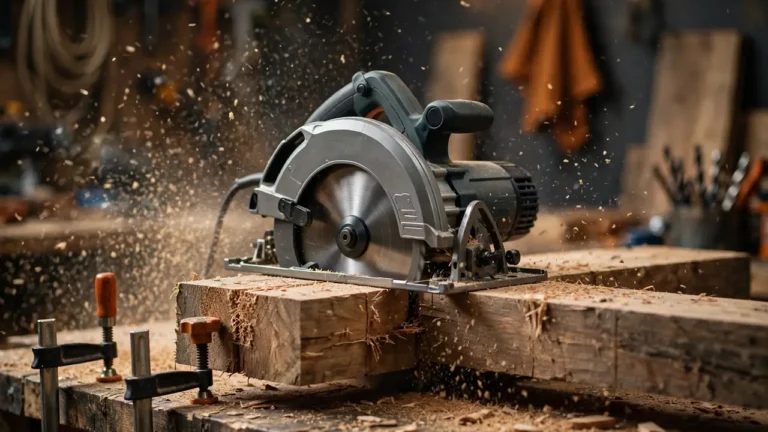
A mitre saw and a circular saw are not substitutes. A mitre saw wins on repeat crosscuts and angles: set the angle once, and every board comes out identical, which is exactly what architraves, skirting, decking and framing demand. A circular saw wins on ripping long lengths, cutting sheet material and working where the saw must go to the timber. Most serious workshops end up with both; our circular saw guide covers the handheld side.
Setting Up Safely
A mitre saw is a fast, unforgiving tool, and most accidents come from rushing rather than from the saw itself. Clamp the workpiece, keep both hands clear of the blade path, and let the blade reach full speed before it touches timber. After the cut, let the blade stop completely before lifting it out. Wear eye and hearing protection, and a dust mask for indoor cutting. Never remove the blade guard, and always unplug the saw (or remove the battery) before changing a blade. Our workshop safety guide covers the full setup routine. Housing Industry Australia’s guide to using hand and power tools safely covers the same basics in more detail.
Five Mitre Saw Mistakes That Ruin Cuts
Most rough cuts and damaged boards come from technique, not the saw:
- Using the wrong blade. A framing blade tears fine trim; a fine-tooth blade crawls through thick timber.
- Forcing the cut. Pushing hard does not cut faster — it deflects the blade and burns the timber. Let the blade do the work.
- No support for long boards. An unsupported board tips as the cut finishes, binding the blade and splintering the offcut.
- Skipping a test cut. Angles and stops drift, especially on a new saw. Cut an offcut first and check it with a square.
- Ignoring calibration. Fences and zero-degree stops move with transport and knocks. Check the fence is square before accurate work.
Keeping Your Mitre Saw Accurate for Years
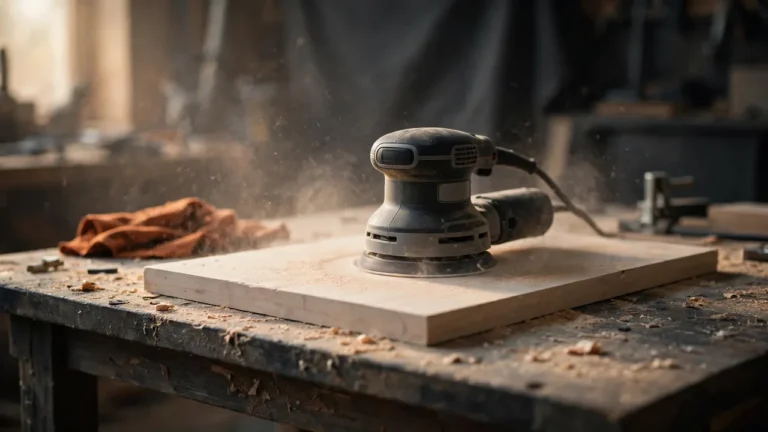
Clean pitch and resin off the blade regularly, because a dirty blade cuts rough. Blow dust out of the slide rails, empty the dust bag or port before it clogs, and check fence and mitre stops for square every few months. With basic care, a quality mitre saw — even the best mitre saw Australia has on offer — easily lasts a decade of homeowner use. When the cut edge needs finishing, a random orbit sander takes mitred joins from rough to furniture-smooth.
Frequently Asked Questions
What size mitre saw do I need?
For most buyers, a 254mm saw is the sweet spot: it cuts decking, skirting and framing comfortably without the bulk of a trade saw. Choose a 210mm or 216mm saw for trim and small parts, and a 305mm saw for wide boards and framing work. That holds whether you buy the best mitre saw Australia has on offer or a budget model.
Is a sliding mitre saw worth it?
Yes, if you cut wide boards. Sliding action stretches the crosscut width well beyond the blade diameter, which is what lets a 254mm saw cut decking in one pass. If you mostly cut skirting and framing studs, a fixed compound saw costs less and does the job.
Can a mitre saw cut metal or masonry?
Most mitre saws are built for timber. Aluminium can be cut with a suitable non-ferrous blade, but masonry is a job for other tools entirely. Do not fit a wood blade to a job it was never made for.
Do I need a mitre saw stand?
Not strictly — a solid bench plus roller supports works for shorter boards. A dedicated stand earns its keep for long stock and site work, because it supports both sides of the cut and keeps the saw at a comfortable working height.
Should I buy corded or cordless?
Buy corded for full power and the lowest total cost, especially if you always cut in one workshop. Buy cordless if you already own the batteries for that platform or you regularly cut away from power points, and remember to compare the full kit price, not just the skin-only figure.