Best Rotary Tools 2026: Top Dremel-Style Picks for Detail Work
“Dremel” has become shorthand for the whole category, the way “Hoover” means vacuum cleaner — but the best rotary tool 2026 has to offer might not say Dremel on the side. Milwaukee, Ryobi and Bosch all make serious contenders now, and the right choice depends on whether you want corded power, cordless freedom, or a flex-shaft setup for jeweller-level precision.
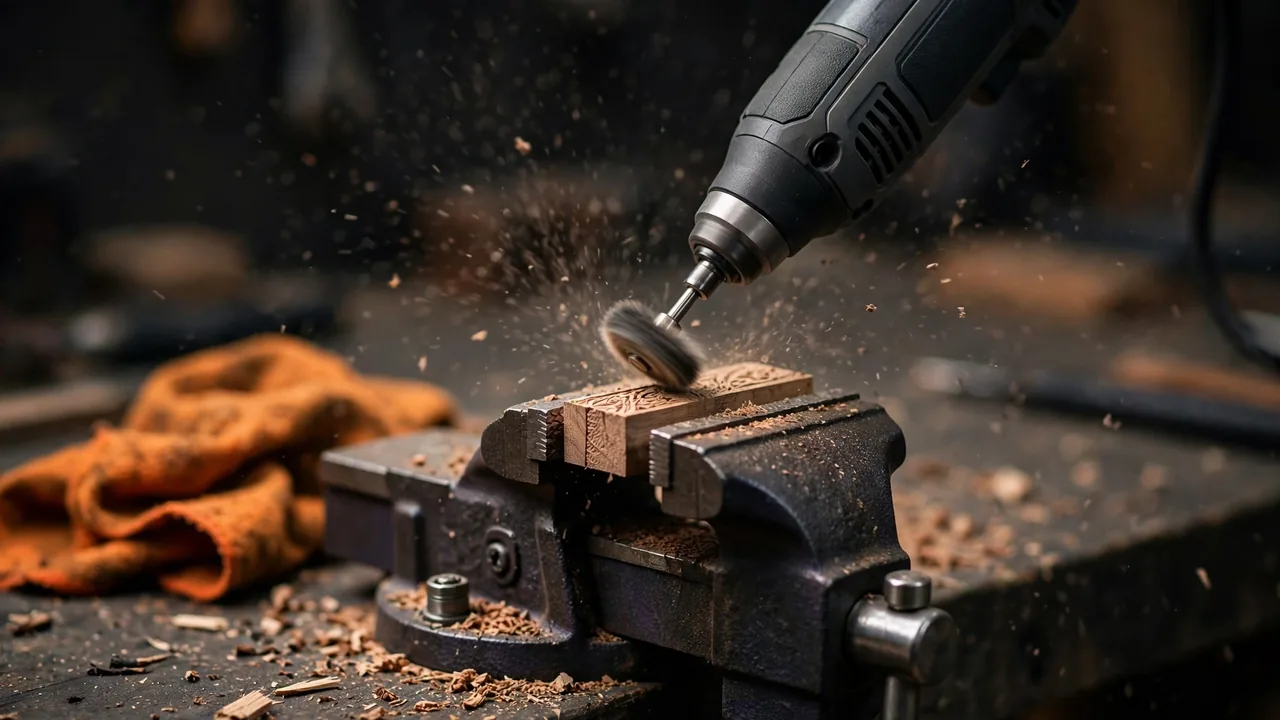
A rotary tool is a high-speed handheld motor that spins small accessories — cutting wheels, grinding stones, sanding drums, polishing buffs, carving burrs — at up to 35,000 RPM. It is the tool for detail work: engraving, deburring, sharpening, polishing and cutting in places too small for anything else. Here are the five worth buying, and how to choose between them.
What Makes the Best Rotary Tool in 2026
Four things separate a great rotary tool from a mediocre one. Speed range: 5,000 to 35,000 RPM with true variable control covers everything from polishing (low speed) to cutting metal (high speed). Accessory system: the tool should accept standard 1/8-inch shank accessories and ideally the full ecosystem of attachments — cutting guides, flex shafts, router bases. Collet/chuck design: how fast you can swap bits matters when you change accessories ten times a project. Power delivery: corded tools hold full power indefinitely; cordless tools trade some stamina for freedom. Electronic feedback, which holds speed under load, is a feature worth paying for.
Best Rotary Tool 2026 Reviews
1. Dremel 4300 — Best Overall (Corded)
The Dremel 4300 is the benchmark every other rotary tool is measured against, and it is still the one to beat for most people. The 1.8-amp motor is the most powerful Dremel has put in a handheld rotary tool, spinning 5,000 to 35,000 RPM with electronic feedback that holds the speed steady when the accessory bites into the work. Cheaper tools slow down under load; the 4300 does not.
The universal 3-jaw chuck is the headline feature: it accepts all Dremel accessory shank sizes without collet swaps, so changing from a cutting wheel to a grinding stone takes seconds and needs no wrench. The pivoting LED work light at the nose illuminates the exact spot you are working on, and the slim body with 360-degree grip zone is comfortable held like a pen for detail work. Kits like the 4300-5/40 bundle five attachments and 40 accessories — including the flex shaft, garden tool sharpener and cutting guide — in a hard case.
- Power: 1.8 amp, corded (6-foot cord)
- Speed: 5,000–35,000 RPM, variable with electronic feedback
- Chuck: universal 3-jaw, keyless
- Extras: pivot LED light, compatible with all Dremel attachments
- Warranty: 2 years
Best for: anyone who wants the most capable, best-supported rotary tool. If you work at a bench near an outlet, buy this one.
2. Dremel 8220 — Best Cordless
The Dremel 8220 proves cordless rotary tools have grown up. Running on a 12V Max lithium-ion battery, it delivers the full 5,000 to 35,000 RPM range — genuine corded-equivalent speed — with electronic feedback to hold it under load. At about 1.45 pounds with the battery, it is light enough for extended detail work without hand fatigue.
The EZ Twist nose cap has an integrated wrench, so accessory changes need no separate tool — unscrew the cap, use its steel insert on the collet nut, done. It accepts all Dremel attachments and accessories, and the 12V battery charges in about an hour. The motor brake stops the accessory spinning the moment you switch off, so you can set the tool down immediately instead of waiting for spin-down. See Dremel’s official 8220 page for full specifications.
- Power: 12V Max lithium-ion
- Speed: 5,000–35,000 RPM, variable with electronic feedback
- Accessory change: EZ Twist integrated wrench nose cap
- Weight: approx. 1.45 lbs with battery
- Warranty: 2 years
Best for: detail work away from outlets — carving outdoors, repairs around the house, automotive detailing. The cordless freedom is transformative if you have only ever used corded.
3. Milwaukee 2460-20 M12 — Best for Tradespeople
Milwaukee’s M12 rotary tool is built for people who already live on the M12 platform — electricians, plumbers, HVAC techs and maintenance crews. The 12V motor runs 5,000 to 32,000 RPM with a 5-speed dial, and the 1/8-inch collet accepts standard rotary accessories (1/32 to 1/8 inch with the right collets), so your existing Dremel bits fit.
What sets it apart is jobsite toughness: grinder-style exhaust ports and a protected front bearing that Milwaukee rates for up to 10 times the tool life of the competition, plus an LED work light and a battery fuel gauge. At 9.5 inches and 1.3 pounds it is compact enough for one-handed work in panels and ceiling cavities. The 5-year warranty is the longest here by a mile — a statement of confidence.
- Power: M12 (tool only; batteries sold separately)
- Speed: 5,000–32,000 RPM, 5-speed dial
- Collet: 1/8 inch (accepts 1/32–1/8 inch accessories)
- Extras: LED light, fuel gauge
- Warranty: 5 years
Best for: tradespeople on the M12 system who need a rotary tool that survives jobsite life. For its bigger cutting jobs, see our oscillating multi-tool roundup.
4. Ryobi P460 18V ONE+ — Best Value Flex-Shaft
The Ryobi P460 takes a completely different approach: the motor lives in a base station and drives a slim pen-style handpiece through a 36-inch flex shaft. The result is the most comfortable precision grip of any tool here — the handpiece is far slimmer and lighter than a motor-in-hand rotary tool, which matters enormously for engraving, carving and jewellery-scale work.
Specs are solid: up to 34,000 RPM variable speed, 1/8-inch collet, and 33 included accessories covering cutting, grinding, sanding and polishing. The base station has on-board accessory storage, rubber feet, and keyhole slots for wall mounting to save bench space. Being on the 18V ONE+ platform means the battery also runs 260+ other Ryobi tools. The motor is brushed rather than brushless, which is the main compromise — but at this price, with a 3-year warranty, it is exceptional value.
- Power: 18V ONE+ (battery and charger options available)
- Speed: up to 34,000 RPM, variable
- Design: base station with 36-inch flex shaft and pen handpiece
- Included: 33 accessories, on-board storage
- Warranty: 3 years
Best for: crafters, carvers and engravers who prioritise precision and comfort, and anyone already on the Ryobi ONE+ platform.
5. Bosch GRO 12V-35 — Best Pro Cordless Alternative
Bosch’s 12V rotary tool is the pro-grade cordless alternative to the Dremel 8220. The brushless-class motor (Bosch’s EC design) runs 5,000 to 35,000 RPM across six speed settings, with an LED work light, a charge-level indicator and blockage protection that stops the motor if an accessory jams — protecting both the tool and the battery.
The practical advice in Bosch’s own manual is worth repeating for any rotary tool: hold it like a pen between thumb and forefinger for detail work, use a golf-style grip for heavy cutting and grinding, and keep polishing and buffing under 15,000 RPM to avoid damaging the workpiece. It is a compact, well-balanced tool that sits naturally in the 12V Bosch Professional system.
- Power: 12V Bosch Professional
- Speed: 5,000–35,000 RPM, 6 settings
- Extras: LED light, charge indicator, blockage protection
- Weight: approx. 0.65–0.85 kg with battery
Best for: users invested in Bosch’s 12V Professional platform who want a tough, no-nonsense cordless rotary tool.
Rotary Tool Buying Guide
Speed: why the range matters more than the maximum
Every rotary tool here tops out at 32,000–35,000 RPM, but the bottom of the range matters just as much. Polishing, buffing and working plastics need low speeds (5,000–15,000 RPM) to avoid melting or burning. Cutting and grinding want high speed. A tool with true variable control across the full range — not just “fast” and “faster” — handles every material correctly. Electronic feedback, which maintains speed under load, is the feature that separates pro tools from toys.
Collets, chucks and accessory changes
Most rotary accessories use 1/8-inch shanks, with smaller 1/32, 1/16 and 3/32-inch sizes for precision bits. Traditional tools need collet swaps (and the little wrench) to change shank sizes; the Dremel 4300’s universal 3-jaw chuck and the 8220’s EZ Twist cap eliminate that faff. If you change accessories constantly, prioritise the chuck design — it affects your daily experience more than any spec.
The accessories ecosystem
A rotary tool is only as useful as its accessories. Dremel’s ecosystem is unmatched: hundreds of bits plus attachments like the flex shaft, plunge router base, circle cutter, detailer’s grip and chainsaw sharpening kit. Milwaukee and Bosch accessories cover the essentials well. Before buying into a platform, check that the attachments you want exist for it — especially the flex shaft if you do precision work.
Corded vs cordless
Corded (Dremel 4300) gives unlimited runtime and slightly more sustained power — ideal for bench work. Cordless (8220, M12, GRO 12V-35, P460) gives freedom to work anywhere, with modern batteries delivering genuine corded-equivalent speed. Heavy, continuous grinding still favours corded; everything else is a toss-up. Many serious users eventually own one of each.
Ergonomics for long sessions
Detail work means holding the tool for an hour at a time. Slim bodies, soft-grip zones and pen-style holds (or a true flex-shaft handpiece like the Ryobi’s) reduce fatigue dramatically. Weight matters too — the difference between 1.3 and 2.6 pounds is enormous after forty minutes of engraving. If possible, hold the tool before buying.
Speed Guide: What RPM for What Material
- Plastics and acrylic: 5,000–10,000 RPM — higher speeds melt the material
- Polishing and buffing: up to 15,000 RPM — faster risks burning the workpiece
- Softwood carving and engraving: 15,000–25,000 RPM
- Grinding and sharpening: 20,000–30,000 RPM
- Cutting metal with cutoff wheels: 30,000–35,000 RPM
- Drilling: match the bit size — small bits fast, larger bits slower
These are starting points, not rules. Let the accessory manufacturer’s rating be the final word, and always wear eye protection — cutoff wheels can shatter. Our workshop safety guide covers rotary tool safety in detail.
Rotary Tool Safety Essentials
Rotary tools look harmless, but a cutoff wheel at 35,000 RPM demands respect. Always wear safety glasses — a shattered wheel throws fragments at ballistic speed. Wear a dust mask when grinding, sanding or cutting; the dust is fine and goes straight for your lungs. Check every accessory’s maximum RPM rating before use and never exceed it. Let the tool reach full speed before touching the workpiece, use light pressure, and keep the vents clear so the motor stays cool. Unplug the tool or remove the battery before changing accessories. Small tool, real consequences — always treat it like a serious power tool.
Frequently Asked Questions
What is the difference between a rotary tool and an oscillating multi-tool?
A rotary tool spins accessories at high RPM (up to 35,000) for detail work — cutting, grinding, engraving, polishing. An oscillating multi-tool vibrates a blade side to side at lower speed for plunge cuts, flush cuts, scraping and sanding. They complement each other: rotary for detail, oscillating for renovation cuts in tight spaces.
Can a rotary tool cut metal?
Yes. Fibreglass-reinforced cutoff wheels slice through bolts, nails, sheet metal and copper pipe at high RPM. For thicker stock, make multiple shallow passes rather than forcing one deep cut, and always wear eye protection and a dust mask — cutoff wheels throw sparks and can shatter if twisted.
Are Dremel accessories compatible with other rotary tools?
Mostly yes. The industry standard is the 1/8-inch shank, so Dremel bits fit Milwaukee, Bosch and other rotary tools with a 1/8-inch collet, and vice versa. Attachments that thread onto the nose (like router bases and cutting guides) are brand-specific — those only fit the brand they were made for.
Corded or cordless rotary tool?
Corded if you mainly work at a bench — unlimited runtime and maximum sustained power, usually for less money. Cordless if you work around the house, outdoors or on a jobsite. Modern 12V cordless models like the Dremel 8220 genuinely match corded speed; the trade-off is battery runtime on long grinding sessions.