Best Oscillating Multi-Tools 2026: The Ultimate Problem Solver
Every renovation hits a moment where nothing in the toolbox fits: a door jamb that needs undercutting for new flooring, a pipe that needs trimming flush against a wall, grout that needs removing without wrecking the tile. The best oscillating multi-tool is the answer to all of them. It is the tool you buy for one job and then reach for weekly.
An oscillating multi-tool does not spin like a drill or reciprocate like a jigsaw. Its head vibrates side to side in tiny, rapid arcs, which lets it plunge-cut, flush-cut, sand, scrape and grind in places no other tool can reach. Below are the four cordless models worth buying in 2026, plus a guide to the specs and blade systems that actually matter.
What an Oscillating Multi-Tool Actually Does
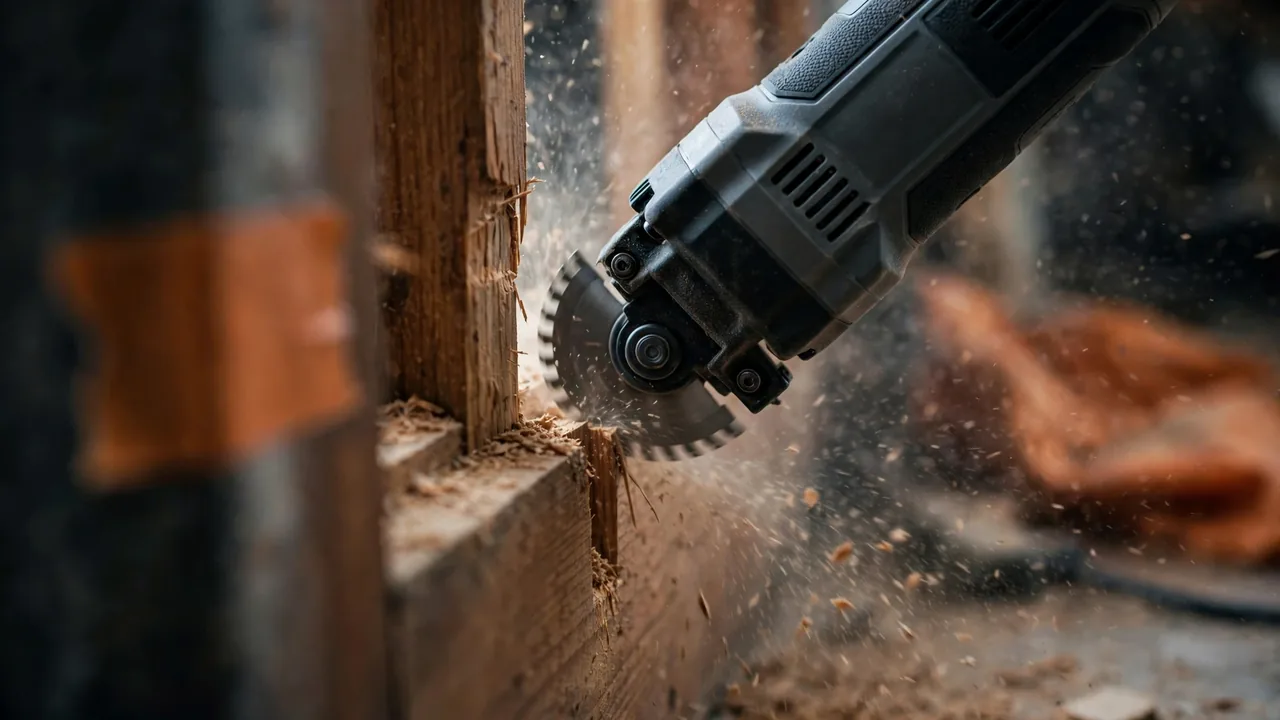
The magic is in the motion. The business end of a multi-tool oscillates — swings back and forth — through a small angle (typically 3 to 4 degrees) at 10,000 to 20,000 oscillations per minute. Because the accessory barely moves, you can press a saw blade against a wall and cut a clean plunge line, or lay a blade flat and slice a pipe flush. Swap the blade for a sanding pad, a scraper or a grout blade and the same tool handles five more jobs. No other power tool is this versatile in tight quarters, which is why remodellers call it the problem solver.
How We Picked the Best Oscillating Multi-Tool
We focused on cutting speed and control, because a multi-tool that stalls or chatters is miserable to use. Key specs: oscillation rate (OPM) and oscillation angle, which together determine aggressiveness; the blade-change system, because you will swap accessories constantly; vibration control for comfort; and the battery platform, since most buyers already own batteries. All four picks below are brushless cordless models — the current sweet spot for power, runtime and convenience.
Best Oscillating Multi-Tool 2026 Reviews
1. Milwaukee 2836-20 M18 FUEL — Best Overall
The Milwaukee M18 FUEL is the hardest-working multi-tool you can buy. Its POWERSTATE brushless motor drives 10,000 to 20,000 OPM through an aggressive 4.2-degree oscillation angle — the widest arc here — which is why it cuts faster than the competition in side-by-side tests. It will chew through nail-embedded wood and hardwoods that make lesser multi-tools stall.
The standout feature is the Auto-Load system: start a cut slowly for precision, and the tool automatically ramps to full speed once the blade is under load. Combined with the 10-setting speed dial, you get finer control than the typical 3-speed selector. Vibration dampening keeps full-tool vibration among the lowest in class despite the aggressive cut, and the 180-degree LED light actually illuminates the cut line instead of being a token gesture.
Blade changes are tool-free with a universal open-back interface, so it accepts most oscillating accessories on the market. Backed by Milwaukee’s 5-year warranty, this is the pick for anyone doing serious renovation work.
- Speed: 10,000–20,000 OPM, 10-setting dial with Auto-Load
- Oscillation angle: 4.2 degrees
- Blade change: tool-free, universal open-back
- Weight: 2.58 lbs (bare tool)
- Warranty: 5 years
Best for: demanding renovation and remodelling work where cutting speed matters most. If you are on the M18 platform, start here.
2. DeWalt DCS356 20V MAX XR — Best Speed Control
DeWalt’s DCS356 takes a different approach: instead of raw aggression, it gives you control. The brushless motor runs three distinct speed ranges — 0–13,000, 0–17,000 and 0–20,000 OPM — paired with a dual-grip variable-speed trigger. Low range for delicate plunge cuts in drywall and veneer, mid for softwood and plastics, high for metal and hardwood. For finish work, that granularity matters more than maximum speed.
The Quick-Change accessory system is genuinely fast: squeeze the lever, seat the blade, release — no hex key, no fumbling. A universal adapter is included so the tool accepts most brands’ accessories, and a depth guide comes in the kit for controlled plunge cuts like undercutting door jambs. The brushless motor delivers up to 57% more runtime than a comparable brushed tool, and a front-mounted LED lights the work.
- Speed: 3-speed selector, 0–13,000 / 0–17,000 / 0–20,000 OPM
- Oscillation angle: 3.2 degrees
- Blade change: Quick-Change, tool-free, with universal adapter
- Weight: 2.33 lbs (bare tool)
- Warranty: 3 years
Best for: finish carpentry and detailed work on the 20V MAX platform, where control beats brute force. Pair it with the right blades — our jigsaw guide covers when to choose each saw.
3. Bosch GOP18V-34 — Best Blade System
Bosch invented the Starlock interface (with Fein), and the GOP18V-34 shows why it matters. The StarlockPlus 3-D interface grips the blade on three dimensions instead of just clamping it, which transfers more torque and makes accessory changes genuinely snap-in — Bosch claims changes up to 8 times faster than the old OIS interface. If you swap between cutting, scraping and sanding all day, you will feel the difference.
The tool itself is a strong performer: brushless motor, 10,000 to 20,000 OPM, a 3.4-degree oscillation angle, and vibration reduced by up to 80% compared with Bosch’s previous 18V generation. The slim-grip handle and 90-degree rotated battery position keep the tool comfortable and out of the way during flush cuts. An LED work light and tool-free accessory ejection (operable with gloves on) round out a well-thought-out package.
Starlock compatibility is tiered and worth understanding: StarlockMax tools accept all three accessory types, StarlockPlus tools accept Plus and standard, and basic Starlock tools accept only standard. The GOP18V-34 sits in the middle tier — plenty for most users. Bosch backs it with a 5-year limited warranty. Read the trade-press coverage of Bosch’s StarlockPlus launch for the full announcement details.
- Speed: 10,000–20,000 OPM, variable
- Oscillation angle: 3.4 degrees
- Blade interface: StarlockPlus (accepts Starlock and StarlockPlus accessories)
- Vibration: up to 80% less than previous generation
- Warranty: 5 years
Best for: users who value fast blade changes and low vibration, and anyone already invested in Starlock accessories.
4. Makita XMT04 18V LXT — Best for Makita Owners
Makita’s 18V LXT brushless multi-tool is the quiet achiever of the group. It uses the StarlockMax interface — the top tier, compatible with Starlock, StarlockPlus and StarlockMax accessories — so blade choice is never a limitation. The variable-speed dial runs 10,000 to 20,000 OPM through a 3.6-degree arc, and Makita’s AVT anti-vibration technology keeps it comfortable during long sessions.
Build quality is the selling point here: Extreme Protection Technology (XPT) seals the tool against dust and water for harsh jobsite conditions, and Star Protection Computer Controls guard the battery against overloading, over-discharging and overheating. It is a tool designed to live on a jobsite and keep working. If your drill, circular saw and sander are already teal, this is the obvious multi-tool to add — see our rotary tool roundup for its detail-work counterpart.
- Speed: 10,000–20,000 OPM, variable dial
- Oscillation angle: 3.6 degrees
- Blade interface: StarlockMax (accepts all Starlock accessory types)
- Protection: XPT dust/water resistance
- Warranty: 3 years
Best for: Makita LXT owners and pros who need jobsite-tough dust and water protection.
Oscillating Multi-Tool Buying Guide
OPM and oscillation angle: the power formula
Two numbers define how aggressively a multi-tool cuts. OPM (oscillations per minute) is the speed; oscillation angle is how far the head swings each cycle. A wider angle removes more material per oscillation — that is why the Milwaukee’s 4.2 degrees cuts faster than the DeWalt’s 3.2 at the same OPM. But wider angles also vibrate more and are harder to control for fine work. Match the tool to your work: aggressive angles for demolition and rough cutting, narrower angles for finish work.
Blade interfaces: Starlock vs universal
This is the multi-tool world’s version of phone chargers. The old OIS (Oscillating Interface System) is a 12-pin pattern most brands once shared. Starlock — developed by Bosch and Fein — is a 3-D star pattern that grips better and changes faster, in three tiers: Starlock, StarlockPlus and StarlockMax, each backward compatible with the tiers below it. Milwaukee and DeWalt use their own tool-free clamps with universal adapters. Practical advice: pick a tool whose interface matches the blades you can easily buy, and keep the adapter that comes in the box.
Corded vs cordless
Corded multi-tools still exist and offer unlimited runtime for production work, but for most people cordless has won. A brushless 18V/20V multi-tool has ample power for renovation tasks, and the freedom to work anywhere — up a ladder, in a crawl space — outweighs the cord’s advantages. If you already own batteries on a major platform, cordless is the obvious call.
Vibration: the comfort factor
Multi-tools vibrate by design, and a cheap one will numb your hands in minutes. Look for anti-vibration features: Milwaukee’s vibration dampening, Bosch’s 80% reduction claim, Makita’s AVT. It is not just comfort — lower vibration means better control, cleaner cuts and less fatigue on long jobs.
Blades and accessories: budget for them
The tool is only half the purchase. Bi-metal blades cut wood with nails; carbide blades last far longer in abrasive materials; diamond blades grind out grout and cut tile; rigid and flexible scrapers remove paint, adhesive and caulk; sanding pads with hook-and-loop paper handle detail sanding. Buy quality blades — cheap ones dull fast and a dull oscillating blade is slow, hot and dangerous. Our tool maintenance guide covers keeping accessories in shape.
7 Jobs a Multi-Tool Does Better Than Anything Else
- Undercutting door jambs for new flooring — the flush-cutting blade slides under the trim perfectly.
- Plunge cuts in drywall for electrical boxes — start the cut anywhere, no pilot hole needed.
- Trimming pipes and dowels flush against a surface.
- Removing grout without chipping adjacent tile (use a diamond grout blade).
- Cutting out rotted window sills and trim in place.
- Scraping up old adhesive, paint and caulk with scraper attachments.
- Detail sanding in corners and profiles where a random-orbit sander cannot reach.
Getting the Most From Your Multi-Tool: 5 Pro Tips
A multi-tool rewards technique more than most power tools. These five habits separate clean results from frustration.
- Let the speed do the work. Pushing harder does not cut faster with an oscillating blade — it just overheats the teeth and wears them out. Use light pressure and let the OPM do the cutting.
- Start plunge cuts at an angle. Rock the blade in at roughly 30 degrees, then level out once the teeth have bitten. Stabbing straight down makes the blade skate across the surface.
- Match the speed to the material. High speed for wood and metal, low speed for plastics (which melt), grout and delicate work. This is where the DeWalt’s three speed ranges and the Milwaukee’s 10-setting dial earn their keep.
- Keep blades sharp and clean. Pitch buildup on wood blades causes burning and wandering. A quick scrub with a brass brush and a spray of blade cleaner after each session keeps them cutting like new.
- Wear a dust mask when sanding. Detail sanding throws fine dust straight at your face. A simple P2/N95 mask and safety glasses turn an unpleasant job into a comfortable one.
Frequently Asked Questions
What is an oscillating multi-tool used for?
Cutting, sanding, scraping, grinding and grout removal in tight spaces. Its signature jobs are plunge cuts (starting a cut in the middle of a surface), flush cuts (trimming something level with a surface) and undercutting door jambs — tasks where saws, drills and sanders cannot reach or would cause damage.
Are oscillating multi-tool blades universal?
Mostly, but check the interface. Many tools use the OIS pattern or ship with a universal adapter. Starlock-system tools (Bosch, Makita, Fein) use the 3-D Starlock pattern in three tiers — Starlock, StarlockPlus and StarlockMax — where each tool accepts its own tier and everything below it. When in doubt, buy blades labelled for your tool’s system.
Can an oscillating multi-tool cut metal?
Yes, with a bi-metal or carbide blade. It handles sheet metal, nails, screws, bolts and copper pipe well. It is slower than an angle grinder for heavy metal cutting, but far more controlled — ideal when the metal is surrounded by things you do not want to damage.
Corded or cordless oscillating multi-tool?
Cordless for almost everyone. Modern brushless 18V/20V models have plenty of power for renovation work, and the freedom from a cord matters more with this tool than most, since multi-tool work happens in awkward spots. Choose the best tool on the battery platform you already own.