Best Power Tool Battery Platform in Australia: Compatibility Guide
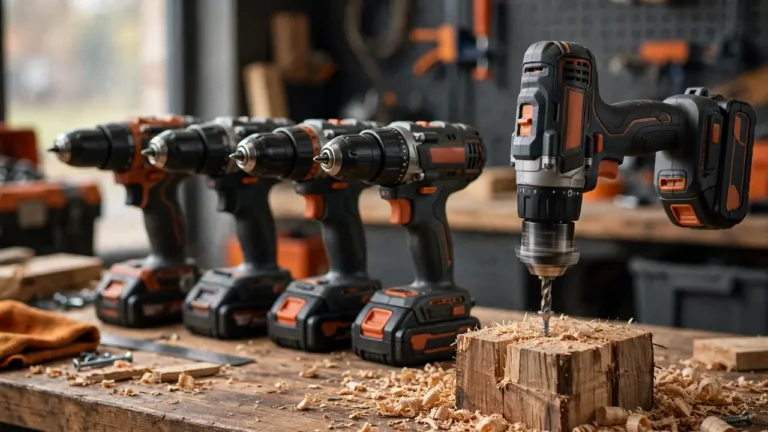
Choosing the best power tool battery platform Australia has to offer is the most expensive decision in a cordless tool kit — and it happens almost by accident. The first drill kit is on special, the battery fits, and five years later you own eleven tools that all drink from the same two packs. That is exactly how it should work. But it means the platform deserves more thought than the tool that introduces it.
This guide explains how the seven platforms Australians actually buy — Makita LXT, Milwaukee M18, DeWalt 18V XR, Ryobi ONE+, Bosch Professional 18V, AEG 18V and Ozito PXC — handle compatibility: what fits what, which chargers are shared, where the traps are, and how to choose based on where you shop and what you build. Every compatibility statement below was checked against manufacturer or Australian retailer pages on 23 October 2026. Where a claim could not be verified that way, it is not in this article.
The one rule that runs every platform
Batteries are interchangeable within a platform and not across platforms. An 18V battery from one brand does not fit another brand’s 18V tools, even though the voltage matches, because the slide rails, contacts and electronics all differ. No manufacturer in this guide sells or endorses an adapter to a rival platform. Third-party adapters exist in the grey market, but they sit outside every maker’s system and outside this guide’s recommendations — if a battery or tool fails on an adapter, the warranty conversation gets difficult quickly.
Within a platform, though, compatibility is the whole point. Buy a battery once and it should run your drill, your saw, your blower and your work light. The platforms differ in how far that promise stretches — across garden tools, across generations, and across the voltage sub-systems most brands also run. Those differences are where the real comparison lives.
Makita LXT 18V
Makita’s LXT is the safe pair of hands: any 18V LXT battery powers any LXT tool, from drills to the garden range, and retailer listings describe the system at over 300 tools. Two cautions define the platform. First, Makita runs three separate cordless systems — 12V CXT, 18V LXT and 40V XGT — and batteries do not swap between them; an XGT battery will not run your LXT drill. Second, some heavier LXT tools take two 18V batteries together for 36V operation, so a growing LXT kit benefits from owning matched pairs. In Australia, LXT is ranged widely through tool specialists, which makes skins easy to find on special.
Milwaukee M18
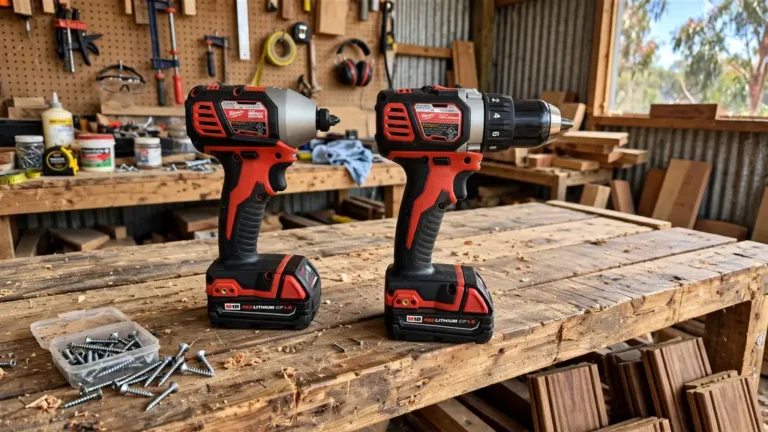
Milwaukee’s M18 platform works the same way: every M18 battery fits every M18 tool, and Milwaukee sells several battery tiers inside the one fitment — standard REDLITHIUM packs, HIGH OUTPUT packs and the newer FORGE packs all share the M18 connection, so an older tool accepts a current battery. Milwaukee’s separate 12V line, M12, is its own system, but Milwaukee’s multi-voltage chargers soften the split: the M12-18FC charger, for example, charges both M12 and M18 packs. Trade buyers lean Milwaukee for the depth of specialist tools; the platform’s AU range is anchored by tool specialists rather than hardware barns. Milwaukee’s own Australian M18 battery page lists the current pack lineup.
DeWalt 18V XR
DeWalt’s 18V XR system is built on the same promise — Bunnings’ listing for the XR 5.0Ah battery states it plainly: compatible with all DeWalt XR 18V tools. Two layers sit on top. POWERSTACK batteries, built on pouch cells, work with the full 18V XR range of tools and chargers, according to DeWalt Australia. And FLEXVOLT batteries are dual-voltage: they run 18V XR tools like a normal pack, and in tools badged FLEXVOLT ADVANTAGE they unlock extra power, with the same packs also driving DeWalt’s 54V tools. That makes XR the platform where the battery you buy can quietly upgrade the tool you already own.
Ryobi ONE+ 18V
Ryobi ONE+ is the DIY giant of Australian sheds, ranged at Bunnings. Bunnings’ starter kit listing states the 4.0Ah battery powers more than 200 tools across the ONE+ DIY, craft, camping, cleaning and gardening ranges, and that the included charger charges any ONE+ battery. That breadth across the garden fence — the same pack running the drill, the line trimmer and the chainsaw — is ONE+’s whole appeal. The HP brushless tools in the range still use the same ONE+ batteries, so stepping up in tool quality never strands your packs.
Bosch Professional 18V System
Bosch Professional makes the boldest compatibility promise in this guide, and it comes straight from Bosch’s Australian 18V system page: the system is fully backwards compatible, with batteries from 2008 working in current tools, and current EXPERT batteries compatible with all Bosch Professional 18V tools. Bosch also points out the practical benefit — buy solo (skin) tools and run them on packs you already own. Bosch Professional 18V tools are additionally part of AMPShare, described on Bosch’s product pages as a multi-brand battery alliance — the only cross-brand arrangement among the platforms in this guide, and a genuinely different model from the closed systems around it. Read the details on Bosch’s Australian 18V system page. Note that Bosch’s green DIY range is a separate line from Bosch Professional blue — check the badge before assuming a pack crosses over, a distinction Bosch’s own ranges draw clearly.
AEG 18V
AEG’s 18V system, ranged at Bunnings for the trade-leaning buyer, keeps its compatibility simple: Bunnings’ listings state its chargers charge any AEG 18V lithium-ion battery, and its FORCE batteries are built to keep new and existing AEG 18V tools running at peak performance. The nuance is performance rather than fit — FORCE packs paired with FUSION tools form what AEG calls a Smart Sync system, with listings claiming up to 25 percent more power from that pairing. The battery still fits the non-FUSION tools; it just gives the FUSION range an extra gear.
Ozito PXC 18V
Ozito’s PXC — Power X-Change — is the budget platform at Bunnings, and its compatibility story has one naming wrinkle worth knowing. Bunnings lists PXC kit batteries as compatible with all Ozito 18V PXC tool and garden products, and the Bunnings Workshop community confirms that older Ozito “X Power X Change” branding is the same platform as PXC: an older 18V X Power X Change battery works in a newer PXC tool and vice versa. The trap is voltage, not vintage — Ozito’s 12V tools are not part of the 18V PXC system, so a 12V drill battery will not run an 18V PXC saw. For household DIY and garden work, PXC’s skin prices are the lowest in this guide, which is its own form of compatibility: with your budget.
Two-battery tools and the higher-voltage escape hatches
Every 18V platform in this guide meets jobs an 18V pack cannot do alone, and each brand answers differently — which matters if your ambitions include big outdoor gear. Makita pairs two 18V LXT batteries in its 36V tools, so your existing packs double up rather than being replaced. DeWalt’s FLEXVOLT packs change voltage with the tool: 18V in XR tools, 54V in its heavy range, one battery serving both worlds. Milwaukee and the others run separate higher-voltage lines for their biggest outdoor equipment, which are their own systems again — the batteries do not cross back down. None of these approaches is wrong, but they are not equal for a buyer whose next purchase is a big mower or a large chainsaw. If outdoor gear is on your horizon, read how your shortlisted platform handles its heavy tools before the first kit, not after the fifth skin. Battery chainsaws are where the two-battery approach shows up first in most gardens, and it is the main reason platform choice echoes for years.
How to check a platform before you commit
Three checks take ten minutes and prevent the classic regrets. First, list the next five tools you realistically want and confirm each exists as a skin on the platform, at a price you accept — a platform is only as good as its catalogue for your jobs. Second, confirm the battery fitment in writing on the manufacturer or retailer page: same platform name, same voltage family, no reliance on a salesperson’s “should fit”. Third, look at the charger you are actually getting in the starter kit — a slow charger with two batteries is a bottleneck on a busy weekend, and dual or rapid chargers are the cheapest quality-of-life upgrade in any system. Buyers who run these checks rarely change platforms; buyers who skip them fund the second-hand market.
Skins, kits and chargers: how the economics work
Every platform here sells tools two ways. A kit bundles the tool with batteries and a charger; a skin (or bare tool) is the tool alone. Skins are where platforms reward loyalty — the second through tenth tools cost a fraction of the first because the expensive parts, batteries and charger, are already on your shelf. This is also why the first purchase matters so much: the starter kit is not really a drill purchase, it is a platform subscription paid once.
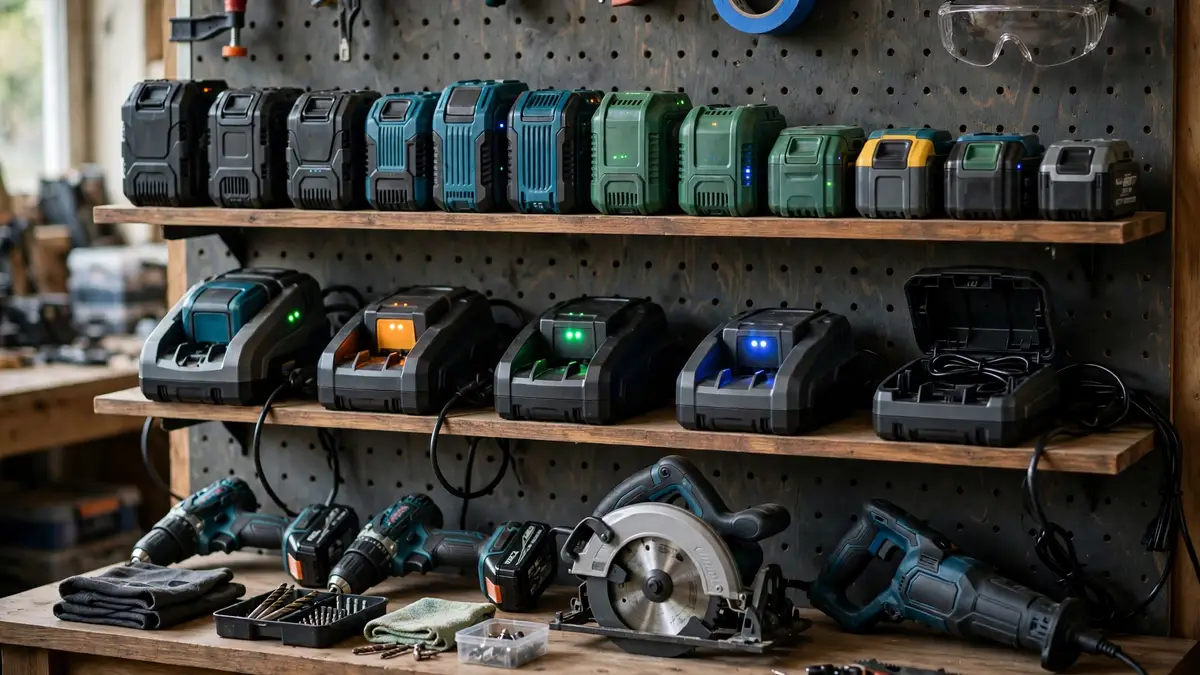
Chargers consolidate more than buyers expect. Milwaukee’s multi-voltage charger covers its 12V and 18V packs. DeWalt’s multi-voltage chargers cover its slide packs across voltages. Within each 18V platform in this guide, one charger family serves the whole range, so a tidy shelf with two batteries and a dual charger can feed a serious kit. When you compare platform prices, compare the starter kit plus the next three skins you actually want — that basket, not the drill alone, is the true cost of choosing the best power tool battery platform Australia has on offer.
Which is the best power tool battery platform Australia offers you?
There is no single best power tool battery platform Australia-wide — there is only the platform that fits your work, your shops and your next five tools. Match the platform to your work and your shops. Heavy trade use with specialist depth points to Milwaukee M18 or Makita LXT. DeWalt XR suits buyers who like the FLEXVOLT upgrade path. Ryobi ONE+ is the default for DIY and garden breadth at Bunnings prices. Bosch Professional rewards anyone burned by stranded batteries, with its since-2008 compatibility and the AMPShare alliance. AEG 18V is the trade-leaning Bunnings alternative with its FUSION performance tier. Ozito PXC wins on outright value for household work.
Then start where most people start: the drill and driver. Our drill vs impact driver guide explains why that pair is the standard first purchase, our cordless drill shortlist and impact driver shortlist cover the current models, and our chainsaw reviews show what the same platform logic does in the garden. Pick the platform like you will own it for ten years — because you probably will.
Once you have picked a platform, run the numbers on any pack with our battery runtime calculator — it turns voltage and amp-hours into working time per pack, and tells you how many packs a full day on a tool takes.
Frequently Asked Questions
Can I use one brand’s battery in another brand’s tools?
Not natively. Each platform’s batteries, contacts and electronics are its own system, and no manufacturer in this guide sells or endorses a cross-brand adapter. The one formal exception in spirit is Bosch Professional’s membership of the AMPShare multi-brand alliance, which shares batteries among alliance brands by design.
Are old batteries compatible with new tools on the same platform?
Generally yes — that is the core platform promise. Bosch states it most strongly, with batteries from 2008 working in current 18V tools. Makita, Milwaukee, DeWalt, Ryobi, AEG and Ozito all sell current batteries as fitting their full same-platform ranges; the exceptions are separate voltage systems such as 12V lines.
What is a skin or bare tool?
A skin is the tool only — no battery, no charger — sold cheaper for buyers already on the platform. Your existing packs and charger run it. Skins are the main economic reason to stay loyal to one platform.
Do I need the expensive battery tier in each platform?
Not for fit — tiers like Milwaukee FORGE, DeWalt POWERSTACK and AEG FORCE all use the standard platform connection. The tiers buy performance: AEG claims up to 25 percent more power when FORCE packs meet FUSION tools, and DeWalt’s FLEXVOLT packs unlock extra power in FLEXVOLT ADVANTAGE tools. Standard packs still run everything.
Which platform is best for garden tools as well?
Ryobi ONE+ and Ozito PXC both span DIY and garden ranges on one battery, per their Bunnings listings, and Makita LXT covers an extensive garden range on the same packs as its power tools. If the mower, trimmer and drill must share batteries, those three make it easiest in Australia.