Pressure Washer PSI Explained: How Much Power Do You Really Need?
Shopping for a pressure washer feels like an arms race. Every box shouts a bigger number — 2,000 PSI, 3,000 PSI, 4,200 PSI — and it’s natural to assume bigger is better. But pressure is only half the story, and too much of it will chew up your deck, strip paint you wanted to keep, or etch lines into your driveway. This pressure washer PSI guide explains what those numbers actually mean, how much power each common job really needs, and how to pick a machine that cleans well without causing damage. The short version: match the pressure to the job, pay attention to water flow too, and remember that technique beats raw power every time.
What PSI Actually Means
PSI stands for pounds per square inch — it’s a measure of the water pressure coming out of the nozzle. Higher PSI means the water hits the surface harder, which breaks the bond between dirt and the surface more aggressively. That’s the number manufacturers print biggest on the box, and it’s the number most buyers compare.
But PSI alone doesn’t tell you how fast a pressure washer cleans. That depends equally on GPM — gallons per minute — which is the volume of water the machine moves. Think of it this way: PSI is how hard the water hits, and GPM is how much water does the rinsing. A machine with sky-high PSI but a trickle of water flow will blast dirt loose and then leave it sitting there. A machine with strong flow rinses everything away in one pass.
This is why two machines with the same PSI rating can clean at completely different speeds. The one with higher GPM finishes the driveway in half the time. When you’re comparing models, look at both numbers — experienced buyers often care more about GPM than PSI once they’ve owned a washer for a while.
Cleaning Units: The Number That Combines Both
Multiply PSI by GPM and you get cleaning units (CU) — a rough measure of a pressure washer’s total cleaning power. A 2,000 PSI machine at 1.2 GPM gives you 2,400 cleaning units. A 2,800 PSI machine at 2.5 GPM gives you 7,000. That second number tells you far more about real-world performance than PSI alone.
Cleaning units aren’t a perfect metric — nozzle choice, technique, and detergent matter too — but they’re the best single number for comparing machines across brands. If you’re choosing between two washers and one has meaningfully higher cleaning units, it will almost certainly clean faster. Keep this formula in your back pocket when you shop: PSI × GPM = cleaning units.
How Much PSI Each Job Actually Needs
Here’s the practical chart. These are working ranges, not absolutes — technique and nozzle choice shift things around — but they’ll keep you in the safe zone:
| Job | Recommended PSI | Notes |
|---|---|---|
| Cars, trucks, motorcycles | 1,200 – 1,900 | Use a wide 40° nozzle, keep distance, never blast trim or emblems up close |
| Patio furniture, grills | 1,300 – 1,800 | Wide nozzle; too much pressure strips paint and dents soft metal |
| Wood decks and fences | 1,500 – 2,400 | Start low and test in a hidden spot; softwoods scar easily |
| House siding (vinyl, brick) | 1,500 – 2,800 | Spray at a downward angle; never force water up under siding |
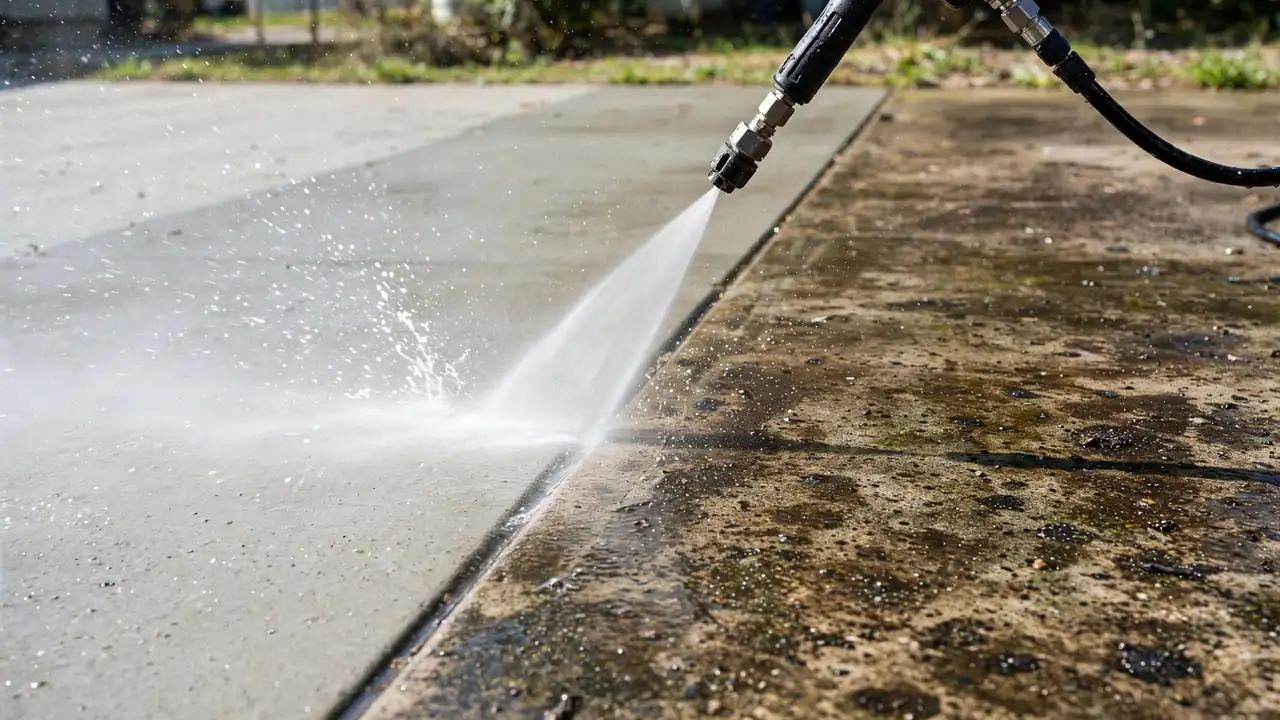
| Concrete driveways, patios | 2,500 – 3,000 | The classic pressure-washer job; higher GPM speeds this up a lot |
| Paint stripping, heavy grime | 2,800 – 4,000 | Gas territory; use the right nozzle and expect to do surface prep after |
Notice the pattern: most homeowner jobs live between 1,300 and 2,800 PSI. The 4,000 PSI monsters are for paint stripping, commercial work, and farm equipment — not for washing the car. Buying more pressure than your jobs need doesn’t clean better; it just raises the odds of damage.
Electric vs Gas: Where the Pressure Comes From
The PSI number is closely tied to the power source, and the trade-off between electric and gas is really a trade-off between convenience and capability.
Electric Pressure Washers (1,300 – 2,300 PSI)
Electric models cover the entire light-to-medium range: cars, furniture, decks, siding, and even driveways if you’re patient. They’re quiet, they start with a button, there’s no fuel or oil to deal with, and they’re light enough to carry with one hand. Models like the Sun Joe SPX3000 (2,030 PSI) and the Ryobi 2,300 PSI brushless unit have made electrics genuinely capable — a far cry from the underpowered electrics of a decade ago.
The limits: lower GPM than gas machines (usually 1.1 to 1.3), so big concrete jobs take longer, and you’re tethered to an outlet — extension cord management is part of the job. For most suburban homeowners, though, an electric washer handles everything on the list above the 2,800 PSI line, which is to say almost everything.
Gas Pressure Washers (2,800 – 4,200+ PSI)
Gas machines bring the big numbers: higher PSI and much higher GPM (2.5+), which means they clean large areas dramatically faster. If you’re washing a long driveway, a big deck, a house exterior, or stripping paint, gas is the right tool. Brands like Simpson and Generac dominate this space with Honda or house-brand engines.
The costs are real: they’re loud, heavy, need fuel and oil maintenance, and they cost significantly more. And the extra pressure is a liability on delicate jobs — a 3,500 PSI gas washer will carve a wooden deck into kindling if you’re careless with the nozzle. Gas makes sense when you regularly need its power; for occasional use, it’s a lot of machine to maintain. Our pressure washer maintenance tips cover winterizing and pump care if you go the gas route.
Nozzles Matter More Than the Number on the Box
Here’s the secret the box doesn’t advertise: the nozzle tip changes the effective pressure more than anything else. The same washer can be gentle or brutal depending on which tip is installed. Standard color-coded tips:
- Red 0°: a pencil-thin jet. Extremely aggressive — it can cut skin, carve wood, and strip paint instantly. Most homeowners should never use it. Many pros avoid it too.
- Yellow 15°: a narrow fan for tough jobs — stripping paint, cleaning concrete, removing heavy grime. Effective but easy to damage surfaces with.
- Green 25°: the all-rounder. Good for driveways, siding, and general cleaning. If you only keep one tip on the wand, make it this one.
- White 40°: a wide, gentle fan for cars, windows, patio furniture, and delicate surfaces. Your default for anything you don’t want to damage.
- Black 65° (soap): low pressure, wide spray — for applying detergent. Always soap with this tip, then switch to a cleaning tip to rinse.
The practical takeaway: start with the widest nozzle that gets the job done, hold the wand at least 12 inches from the surface, and test in an inconspicuous spot first. You can always step down to a narrower tip; you can’t un-scar a deck. Turbo/rotary nozzles (which spin a 0° jet in a circle) clean concrete fast but are just as aggressive as the red tip — treat them with the same respect.
When Too Much Pressure Damages Things
Pressure washer damage is depressingly common, and it almost always comes from too much PSI, too narrow a nozzle, or holding the wand too close. The usual victims:
- Wood decks and fences: too much pressure raises the grain and leaves permanent “wand marks” — stripes where the wood fibers were torn. Softwoods like pine and cedar scar at pressures that wouldn’t bother concrete. If your deck looks fuzzy after washing, the pressure was too high.
- Car paint and trim: high pressure chips paint at edges, forces water past seals into lights and trim, and can peel decals and emblems. Keep it under 1,900 PSI with a 40° nozzle and maintain distance.
- Mortar and brick: aggressive pressure erodes mortar joints over time. Old brick and soft mortar are especially vulnerable — use moderate pressure and a wide fan.
- Windows and screens: direct high-pressure spray breaks seals, forces water inside, and shreds screens. Wash windows with the 40° tip from a distance, or better yet, use a brush and hose.
- Roofs: pressure washing asphalt shingles strips the protective granules and voids warranties. Roofs are a soft-wash (low pressure + detergent) job, not a pressure job.
The rule is simple: pressure removes material. Aim it at dirt and it removes dirt; aim it at the surface itself and it removes the surface. When in doubt, our deck cleaning guide walks through the low-pressure approach that gets wood clean without tearing it up.
Picking the Right Pressure Washer: A Decision Guide
Forget the maximum PSI on the box and work backward from your jobs:
- Mostly cars, furniture, and light cleaning? A compact electric around 1,800–2,000 PSI is plenty. Light, quiet, easy to store.
- Decks, siding, and a driveway once or twice a year? A mid-range electric (2,000–2,300 PSI) with good GPM, or a small gas unit if the driveway is large. This is where most homeowners land.
- Big concrete areas, house exteriors, or paint stripping? Gas, 2,800+ PSI with 2.5+ GPM. The higher flow is what actually saves you hours on big jobs.
- Renting vs. buying? If you need a big gas machine once a year for the driveway, renting is cheaper than buying and maintaining one. Buy the electric for the monthly jobs; rent the beast for the annual one.
And check the details that matter in daily use: hose length (25 feet minimum, 30+ is better), onboard storage for nozzles and the hose, wheel quality on gas units, and whether the detergent tank is built in. A well-designed 2,000 PSI washer you enjoy using beats a 3,500 PSI monster that lives in the corner because it’s a hassle to drag out. Karcher’s lineup at karcher.com is a good place to see how electric models are spec’d if you’re comparing.
Safety Basics
Pressure washers injure thousands of people a year, mostly from the same few mistakes. Never point the wand at people or pets — even a “low” 1,500 PSI jet can break skin and inject water into tissue, which causes serious infections. Wear closed-toe shoes and eye protection; the spray kicks up debris at surprising speed. Never use a ladder with a pressure washer — the recoil can throw you off balance. And keep the spray away from electrical outlets, fixtures, and the power cord itself.
One more: don’t run a gas washer in an enclosed garage. The carbon monoxide risk is the same as any small engine. Roll it outside, point the exhaust away from the house, and keep the area ventilated.
Frequently Asked Questions
What PSI do I need to clean a driveway?
2,500 to 3,000 PSI with good water flow (2+ GPM) is the sweet spot for concrete driveways. Lower pressure works but takes much longer; higher pressure risks etching the concrete if you linger in one spot. A 25° nozzle and steady, overlapping passes give the best results.
Is higher PSI always better?
No. Higher PSI cleans stubborn grime faster, but it also damages wood, car paint, mortar, and siding more easily. Most homeowner jobs need 1,300–2,800 PSI. Beyond that you’re in commercial and paint-stripping territory, where the extra power is a liability on delicate surfaces.
What matters more, PSI or GPM?
Both matter, and GPM is underrated. PSI breaks dirt loose; GPM rinses it away and determines how fast you cover an area. For big jobs like driveways, a higher-GPM machine finishes dramatically faster. Multiply them (PSI × GPM) to get cleaning units — the best single number for comparing machines.
Can a pressure washer damage my car?
Yes, if misused. Keep pressure under 1,900 PSI, use a 40° nozzle, stay at least 12 inches away, and never blast trim, emblems, or chipped paint up close. Done right, pressure washing is safe for cars and far gentler than a brush on dirty paint.
Should I buy electric or gas?
Buy electric if your jobs are cars, furniture, decks, siding, and occasional driveway cleaning — it’s quieter, cheaper, and maintenance-free. Buy gas if you regularly clean large concrete areas, house exteriors, or strip paint, where the higher PSI and GPM save hours. If you need gas power once a year, renting is often the smarter move.