Battery vs Petrol Chainsaw: Which One Wins for Aussie Yards?
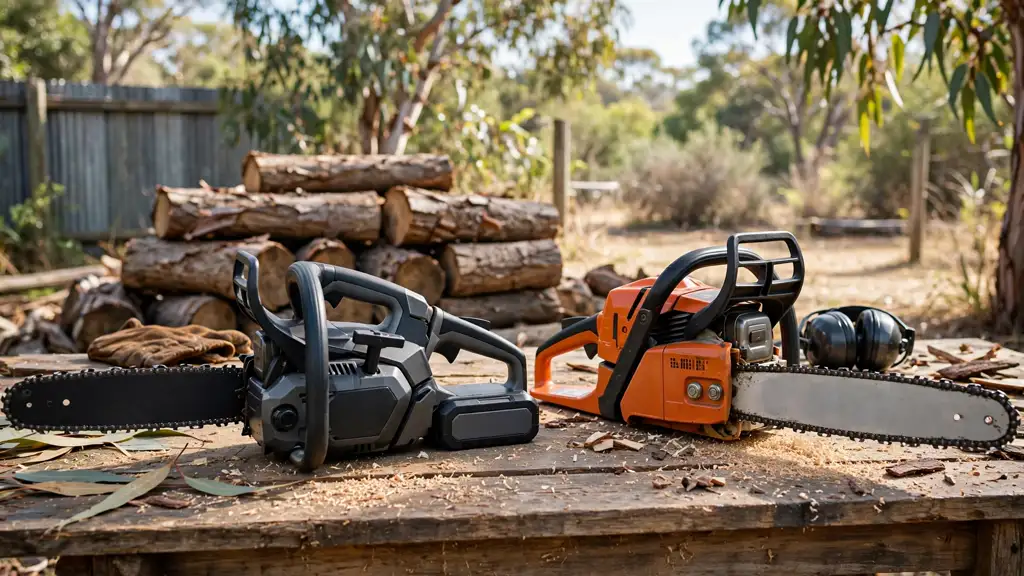
Picking between a battery vs petrol chainsaw is the first decision most Aussie buyers get wrong — the two suit different jobs. A battery saw is the easy pick for a suburban yard: press a button and cut. A petrol saw is the pick where the woodpile never seems to shrink. This guide compares power, runtime, weight, noise, maintenance and real Australian prices, checked 15 November 2026.
Key Takeaways
- For most suburban yards, a battery saw wins: instant start, far less noise, almost no maintenance, and enough power for pruning and firewood up to 30 cm across.
- Petrol still wins for big hardwood, all-day cutting and remote blocks: refuel in a minute and keep going.
- On short cuts, a good 36V or 56V battery saw keeps pace with a homeowner petrol saw. The gap opens on thick hardwood and long sessions.
- Prices now overlap: a Ryobi 36V 16-inch kit is $549 at Bunnings, a Husqvarna 130 petrol saw starts from $569 at an Australian dealer.
- Buy the saw for the job you do most weeks, not the biggest job you might do once a year.
Battery vs Petrol Chainsaw at a Glance
| Battery | Petrol | |
|---|---|---|
| Starting | Press a button | Prime, choke, pull cord |
| Runtime | 30–90 minutes per charge | As long as you have fuel |
| Noise | Quiet enough to talk over | 100–110 dB(A) at the ear |
| Maintenance | Chain, bar oil, charge the battery | Fuel mixing, spark plug, filters |
| Best for | Suburban yards, pruning, light firewood | Rural blocks, big hardwood, all-day firewood |
| Typical kit price | $549–$999 at Bunnings | From $569 for a homeowner saw |
Battery vs Petrol Chainsaw: Power and Cutting Speed
Power is where the old argument used to end: petrol won, full stop. That is no longer true for home use. A modern 36V or 56V brushless battery saw cuts through a 20 cm gum branch without slowing, and on short cuts it is hard to tell the two apart. EGO rates its 16-inch CS1611 as equal to a 40cc petrol saw, with a chain speed of 20 metres per second.
Where petrol still pulls ahead is sustained grunt. A 59.8cc saw like the Echo CS-590 Timber Wolf holds full power through log after log of dense hardwood, while a battery saw slows as its pack drains. For a single tree or a trailer load, you will not feel it. For a full day cutting red gum, you will.
Bar length tells the same story. Battery saws mostly run 12 to 20-inch bars, with 14 to 16 inches the sweet spot for pruning and firewood up to about 30 cm across. Petrol saws run 16 to 24 inches and beyond, for trunks wider than the bar. Dropping trees or cutting logs wider than 40 cm? Petrol is still the honest answer. Our battery chainsaw reviews go deeper on which battery models hold their pace best.
Runtime: How Long Each One Keeps Cutting
Runtime is the real dividing line — think in cuts, not minutes. EGO says its 16-inch CS1611 makes up to 130 cuts through a 4×4 on its included 2.5Ah battery: a morning of pruning and a modest firewood pile fits inside one charge. An 8.0Ah pack holds far more energy than a 2.5Ah one.
Petrol has no equivalent limit: fill the tank, cut until it is empty, refill in a minute and keep going. That is why petrol still owns firewood season on rural blocks: nobody wants to stop a trailer-load of cutting to wait on a charger. Two batteries fix it, but that is a second purchase, and not a cheap one.
For a suburban block, runtime rarely decides it. Most yard jobs take under an hour of actual cutting, and a single 4.0Ah charge covers that. Runtime only matters when the job is measured in trailer loads rather than branches.
Weight and Handling
A battery saw usually feels lighter in the hand. The Ryobi 36V 14-inch kit’s saw weighs 4.2 kg without its battery, and even with a 4.0Ah pack clipped in, the balance is kind to your arms over a long session. No fuel tank sloshing, no hot exhaust near your leg.
Petrol saws carry their weight differently. The engine, fuel tank and exhaust sit high, and a farm-grade petrol saw with a 20-inch bar is a two-handed tool — after an hour your shoulders know about it. That is the price of the power, and a first-time buyer will find a battery saw easier to live with.
Vibration is part of handling too. Petrol engines shake — good mounts tame it, but numb hands after an hour are a normal petrol experience. Battery saws vibrate far less, with no combustion engine shaking the handles. For anyone with sore wrists or a long pruning list, that alone can settle the choice.
One warning: the Ryobi 36V 12-inch top-handle kit is built for trained arborists, not beginners. Stick to a rear-handle model unless you are trained for the other kind.
Noise and Neighbours
A petrol chainsaw runs at around 100–110 dB(A) at the operator’s ear, according to SafeWork SA — loud enough that hearing protection is not optional, and loud enough that the whole street knows you are cutting. A battery saw is a whirr instead of a roar, quiet enough to hear someone talking to you, with no two-stroke smoke drifting over the fence.
Many councils restrict noisy work to certain hours, and a battery saw lets you start earlier on a Saturday without a neighbour knocking. On a small block, the quiet saw is the polite choice, and you can still hear what is going on around you when branches are falling.
On a rural block with no neighbours in earshot, petrol noise does not matter. But if your block is suburban, noise alone is a strong reason to go battery. Check your council’s rules before an early start — some restrict chainsaw use on total fire ban days.
Maintenance: What Each One Asks of You
A battery saw asks almost nothing of you. Keep the chain sharp, the bar oiled, and the battery charged and stored somewhere dry and cool. No fuel to mix, no spark plug to foul, no air filter to clean, no carburettor to gum up. When the season ends, you put the saw on a shelf and it is ready next time. That is why battery saws suit people who cut once a month rather than once a week.
A petrol saw asks for a routine, and it punishes you for skipping it. Fuel must be mixed fresh — 95-octane unleaded with quality two-stroke oil at 50:1 unless your manual says otherwise — and stale fuel left in the tank is the number one cause of hard starting. Clean the air filter, check the spark plug, and drain or treat the fuel if the saw sits for months, or the carburettor will clog. None of this is hard, but a neglected petrol saw will not start when you need it.
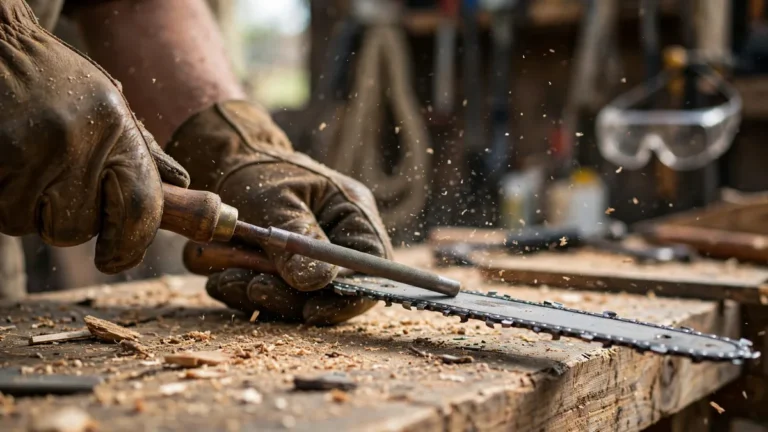
Both types share the same chain and bar care: sharpen the chain every few hours of cutting, check the tension before each session, and keep bar oil topped up. A dull chain is the most common reason a saw of either type cuts badly — it binds, it kicks, and it overworks the motor. Our top gas chainsaws guide covers the petrol care routine in full.
Long-term, a looked-after petrol saw lasts a decade or more, and any small-engine mechanic can service it. A battery saw’s long-term question is the battery: lithium packs slowly lose capacity, and a replacement is a real cost. Do not store it flat or leave it baking in a hot shed.
Battery vs Petrol Chainsaw: What It Really Costs to Own
The sticker price is only the start. Here are real Australian prices, checked 15 November 2026.
| Saw | Type | Price |
|---|---|---|
| Ryobi 36V HP Brushless 16-inch 4Ah kit | Battery | $549 |
| Ryobi 36V HP Brushless 20-inch 8Ah kit | Battery | $999 |
| Ryobi 36V HP Brushless 12-inch top-handle 4Ah kit | Battery | $599 |
| Husqvarna 130 (38cc, 16-inch bar) | Petrol | From $569 |
The old price gap is gone. The mid-range battery kit at $549 sits within $20 of the homeowner petrol saw at $569, battery and charger included. The dearest battery kit, the Ryobi 20-inch at $999, costs more — but it carries Ryobi’s biggest battery, an 8.0Ah pack.
The split comes after the purchase. A spare Ryobi 36V 4.0Ah battery costs $279 for the High Performance EDGE version at Bunnings, so doubling runtime is a serious second purchase. Petrol’s ongoing cost is fuel and oil for every tank, plus a service every year or two if you cut hard. The battery cost lands in one lump; petrol’s dribbles out tank by tank.
Do not forget the gear. A helmet with visor and earmuffs, chaps and gloves are not optional on any chainsaw, and they cost real money on top of the saw. Bar oil is a shared running cost: both types drink it. No Australian price could be verified for the Echo CS-590 Timber Wolf, so it is not priced here — check with a local dealer before budgeting for one.
Who Should Buy Which
Buy a battery saw if your block is suburban, your jobs are pruning, storm cleanup and the occasional firewood load, and you value a saw that starts first time, every time. It suits first-time buyers best — no fuel mixing, no pull cord — and anyone who already owns batteries on the same platform.
Buy a petrol saw if your block is rural, your firewood is measured in trailer loads, or you regularly cut hardwood wider than 40 cm. It suits properties far from a power point, cold mornings where batteries sulk, and anyone who wants to cut all day without watching a charge gauge.
Decision Guide: Five Questions Before You Buy
- How big is the wood? Branches and logs under 30 cm across point to battery; regular work over 40 cm points to petrol.
- How long is the session? Under an hour of cutting suits one battery; a full day of firewood suits a fuel tank.
- Where do you cut? Suburban blocks favour battery; rural blocks and remote work favour petrol.
- Do you already own batteries? A shed full of Ryobi 36V or EGO 56V packs makes battery the cheap choice.
- How do you feel about maintenance? If fuel mixing sounds like a chore, battery removes the whole job.
Answer those five honestly.
The Verdict
For most Australian homeowners, the battery vs petrol chainsaw question has a clear default answer: battery. It starts instantly, runs quietly, needs almost no maintenance, and has the power for everything a suburban yard throws at it. Petrol keeps its crown only where the work is genuinely heavy — big hardwood, all-day sessions, remote blocks — and for those jobs it is still unbeatable.
Frequently Asked Questions
Are battery chainsaws as powerful as petrol chainsaws?
For home jobs, mostly yes. A good 36V or 56V battery saw keeps pace with a homeowner petrol saw on short cuts and wood up to about 30 cm across. Petrol still wins on thick hardwood and long sessions, where it holds full power while a battery fades.
How long does a battery chainsaw last on one charge?
Expect roughly 30 to 90 minutes of hard cutting from a 4.0Ah pack, depending on the battery and the wood. EGO says its 16-inch CS1611 makes up to 130 cuts through a 4×4 on its 2.5Ah battery.
Is a battery chainsaw better for beginners?
Yes. It starts with a button, has no fuel to mix, runs quietly and vibrates far less than a petrol saw, so a first-time user can focus on technique instead of fighting the saw. A rear-handle model is the right first saw; top-handle saws are for trained arborists.
What does a petrol chainsaw cost to run?
More than a battery saw over time. You pay for fresh 95-octane unleaded and two-stroke oil for every tank, plus bar oil and a service every year or two if you cut hard. A battery saw costs a few cents of electricity per charge plus bar oil, with a replacement battery the big cost down the track.
Can I use a battery chainsaw on a total fire ban day?
Rules vary by state and council, so check your local fire authority before cutting on a hot, windy day. Petrol saws face the strictest limits because of exhaust heat and sparks; battery saws are treated more leniently, but a total fire ban can still restrict all chainsaw use in the open.
Which is cheaper overall, battery or petrol?
The purchase prices now overlap: a Ryobi 36V 16-inch kit is $549 at Bunnings and a Husqvarna 130 starts from $569 at an Australian dealer, both checked 15 November 2026. Battery costs more up front if you need a spare battery; petrol costs more over time in fuel and servicing. For light use, battery usually works out cheaper.
Pick the saw for the job you do most weeks: battery for the suburban yard, petrol for the big woodpile. Keep the chain sharp, wear the gear, and check the fire rules before you cut.