Drill vs Impact Driver: Which One Do You Actually Need?
The drill vs impact driver question is usually the second decision a new tool buyer faces, right after picking a battery platform — and it is the one most often answered badly. The two tools look like cousins. They share batteries, they both spin bits, and combo kits bundle them together so often that plenty of people assume they are interchangeable. They are not. Use the wrong one for a day of decking and you will feel it in your wrist, your screw heads and your patience.
This guide settles the drill vs impact driver debate the practical way: how each tool actually delivers its force, which jobs belong to which tool, the handful of jobs where either works, and which one to buy first if the budget only stretches to one. If you want the product shortlists once you have decided, our best cordless drills guide and best impact drivers guide cover the current Australian lineups in detail.
Drill vs impact driver at a glance
| Drill / driver | Impact driver | |
|---|---|---|
| How it works | Steady rotation, torque limited by a clutch | Rotation plus concussive rotational impacts when resistance rises |
| Chuck | Adjustable three-jaw chuck, usually 10 or 13 mm | 6.35 mm (1/4 inch) hex quick-change collet |
| Best at | Drilling holes; driving small screws precisely | Driving long and large fasteners, all day |
| Speed control | Excellent — clutch settings protect the work | Good on modern multi-mode models, cruder on basic ones |
| Noise and kickback | Quiet; can twist your wrist if a bit binds | Loud under load; almost no reaction torque to your hand |
| Length | Longer, especially with a chuck and clutch housing | Short — fits between joists and inside cabinets |
How a drill driver actually works
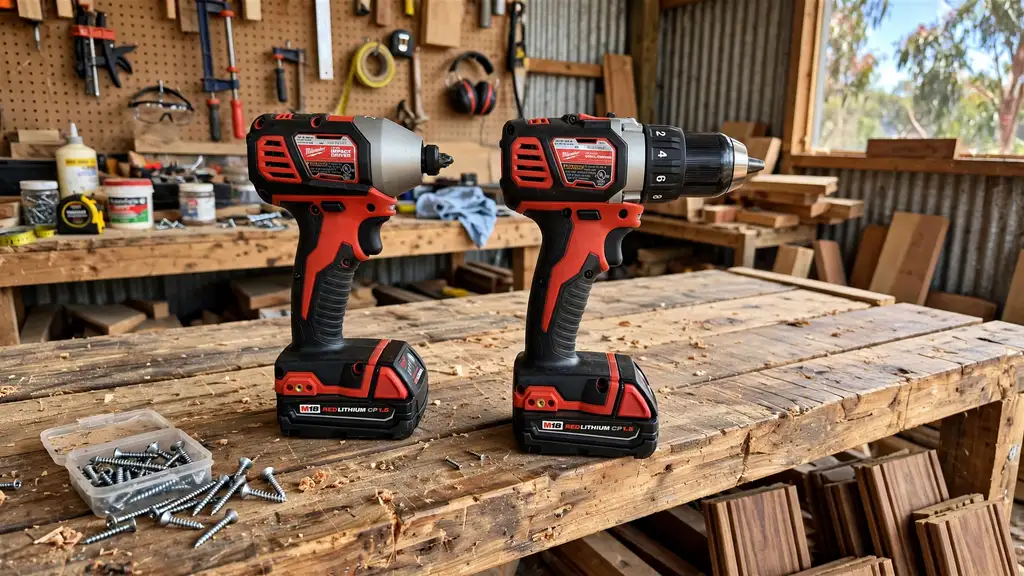
A drill converts motor power into steady rotation. Two features define it. The first is the chuck, which grips round and hex shank bits alike — twist drills, spade bits, hole saws, wire wheels, mixing paddles. If a bit exists, a drill can probably hold it. The second is the clutch: a numbered ring that slips at a set torque so you can drive fifty identical screws to the same depth without snapping heads or burying them through the workpiece.
That control is why the drill is the precision tool of the pair. Drilling a clean hole in tile, metal or hardwood is a steady-rotation job. So is assembling furniture, fitting cabinet hardware, or driving small screws into anything that splits, cracks or strips easily. A hammer drill adds a percussion mode for masonry, which no standard impact driver offers.
How an impact driver actually works
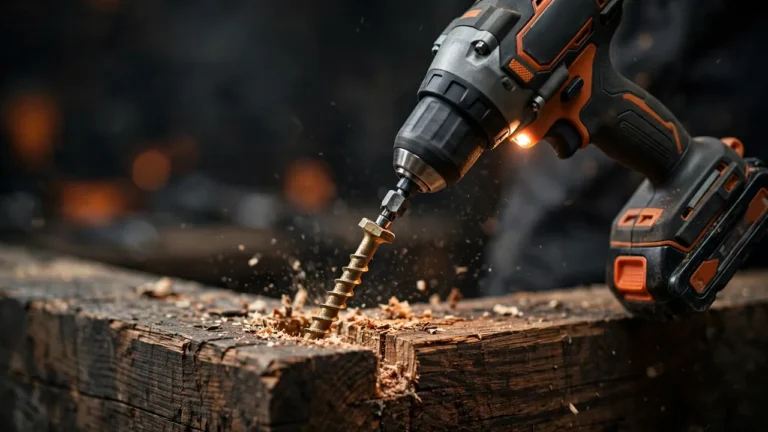
An impact driver also rotates — until resistance builds. Then an internal hammer and anvil mechanism starts striking rotationally, thousands of times a minute, adding bursts of torque exactly when a fastener fights back. That is the rattling noise, and it is also the magic: because the impacts do the work, almost none of the reaction torque reaches your hand. Driving a 100 mm batten screw with a drill means bracing against the twist. Driving it with an impact driver is a one-handed job.
The trade-offs are real. The hex collet only accepts 6.35 mm hex-shank bits, so your old round-shank drill bits stay in the drawer unless you buy hex-shank versions or a chuck adapter. There is no true clutch on most models — newer drivers offer speed modes and assist features, but finesse still belongs to the drill. Impact drivers are also loud enough that hearing protection is a genuine consideration for a day of decking.
Drill vs impact driver, job by job
Decking and framing. Impact driver, and it is not close. Hundreds of long screws, driven flush without pre-drilling in most framing timber, with no wrist strain. This is the job the tool was born for.
Flat-pack furniture and cabinetry. Drill, on a low clutch setting. An impact driver will happily shear a cam screw or drive a fastener through the back of a cabinet panel before you feel it happen.
Drilling holes in timber, metal or plastic. Drill. A clean hole needs steady rotation and a proper chuck. Impact drivers can drill with hex-shank bits for rough work, but the impacting action does hole quality no favours.
Masonry. A hammer drill for fixings into brick and concrete. A standard impact driver is not a masonry drilling tool, whatever the bit packaging implies.
Steel framing and Tek screws. Impact driver — ideally a model with a dedicated self-tapping mode that slows down as the screw bites, so threads are not stripped.
Automotive and rusty fasteners. Impact driver for smaller seized bolts, with proper impact-rated sockets. For serious wheel-nut torque you want its bigger sibling, the impact wrench — a different tool again.
Reading the spec sheet: torque, speed and size
Comparing spec sheets across the drill vs impact driver divide trips people up, because the headline numbers are not measured the same way. A drill’s torque figure describes sustained twisting force. An impact driver’s much larger torque figure describes the peak of its impact bursts. A driver rated at three times the drill’s torque will not drill a hole three times as well — the numbers describe different kinds of work, so compare drills with drills and drivers with drivers.
Speed tells a similar story. Drills offer two or three mechanical speed ranges: low range for torque and big bits, high range for clean small holes. Impact drivers spin fast with no load, then slow themselves under impact. If you drive a lot of small screws, look for a driver with multiple modes rather than raw speed; control at low speed is what prevents cam-out and snapped heads.
Size is the quiet decider. An impact driver is typically 30 to 50 mm shorter than a comparable drill because it has no chuck or clutch housing. Between floor joists, inside a cabinet carcass, or up a ladder all afternoon, that compact head and lighter weight add up to real comfort. A drill’s extra length is the price of versatility.
Noise, fatigue and your neighbours
Nobody puts this on the box, but the impact driver is dramatically louder in use. Under load it sounds like a small machine gun because, mechanically, that is close to what it is. For a Saturday deck build that means hearing protection for you and a thought for the neighbours if you start at seven in the morning. The drill is the polite tool.
Fatigue runs the other way. A drill transfers binding and driving torque straight into your wrist and forearm; a long run of batten screws leaves its mark. The impact driver’s mechanism absorbs that reaction, so a full day of driving is noticeably easier on your arm — provided you are wearing the ear protection its noise demands. Tradies who drive fasteners for a living choose the driver for exactly this trade: louder, but kinder to the body over eight hours.
What about a hammer drill — is that a third option?
It is, and it confuses the comparison because the word “hammer” appears in both camps. A hammer drill is a drill first: same chuck, same clutch, plus a switchable percussion action that pulses the bit forward for drilling into brick, mortar and concrete. The impact driver’s blows are rotational, around the axis, for driving. Forward pulses for drilling masonry; rotational pulses for driving screws. Different directions, different jobs. If your work includes regular fixings into brick, the drill half of your kit should be a hammer drill — the price difference over a standard drill driver is small, and the capability gap on masonry day is not.
Can one tool do both jobs?
Sort of, and the honest answer depends on your work. If you mostly drill holes and drive the occasional screw, a good drill driver covers ninety percent of home use, and an impact driver is a luxury. If you mostly drive fasteners — decks, fences, framing, sheds — an impact driver plus a small set of hex-shank drill bits covers more ground than you would expect, though you will still want a real drill for clean holes and bigger bits.
There is also a middle path worth knowing about: drilling with an impact driver demands impact-rated bits. Standard bits in an impact driver can shatter, because the steel is not built for concussive loads. Whatever you buy, budget for the right bits — our drill bits explainer walks through the types and coatings.
The combo kit question
Most buyers meet this decision as a two-piece combo kit on a shelf, and the kit changes the maths. A drill and impact driver sharing two batteries and one charger usually costs far less than the two tools bought separately, and the batteries are the expensive part of any platform. If a deck, a fence or a shed build is anywhere in your next year, the combo kit is nearly always the smarter buy even if the impact driver sits in its bag for the first month. If your work is genuinely all drilling and delicate driving — picture hanging, flat-pack, the odd shelf — the single drill plus a quality bit set serves you better, and the money saved buys the bits that make any drill perform above its price. Either way, you are buying into a battery system first and tools second; the kit is simply the cheapest door into that system.
Which should you buy first?
Buy the drill first if you can only buy one. It drills properly, drives gently, and handles the widest range of accessories. Then add the impact driver as a skin — tool only, no extra battery or charger — once decking, framing or a big fastener job appears on your list. That sequence is exactly why combo kits sell so well: the pair share batteries, so the second tool costs far less than the first.
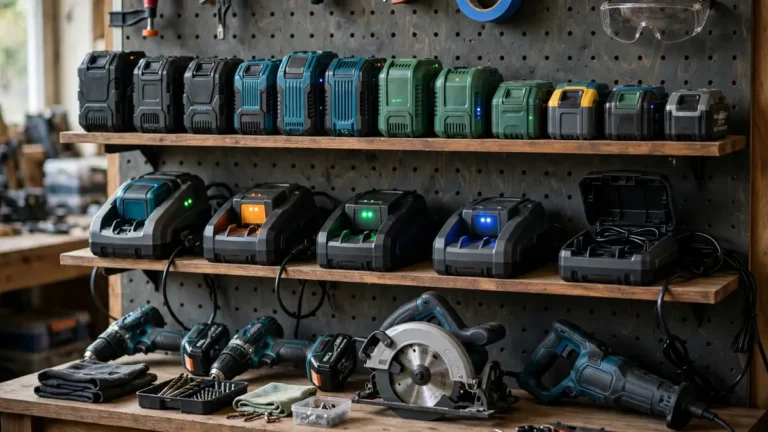
Which raises the decision that outlives both tools: the battery platform. A drill and driver are typically the first two tools on a platform you may run for a decade, so choose the platform before the tools. Our battery platform compatibility guide compares the Australian platforms — Makita LXT, Milwaukee M18, DeWalt XR, Ryobi ONE+, Bosch, AEG and Ozito PXC — and explains what fits what. And if you are still comparing individual models, Milwaukee’s own M18 battery range page shows how one platform’s packs and chargers multiply across a system.
Settle the drill vs impact driver question by the work in front of you, not by which tool looks tougher. Precision and clean holes: drill. Long fasteners all day: impact driver. Most workshops eventually hold both — and once yours does, you will stop thinking of them as rivals and start reaching for each without thinking at all.
Whichever tool you start with, the running costs live in the battery: our battery runtime calculator estimates how long each pack will drive it, and how many packs a day of that work takes.
Frequently Asked Questions
Can I use an impact driver as a drill?
For rough holes with hex-shank bits, yes. For clean, accurate holes, no — the impacting action and the collet’s slight play work against accuracy, and large bits like hole saws and spade bits belong in a drill’s chuck. Treat impact drilling as a convenience, not a replacement.
Do I need both a drill and an impact driver?
Not at first. A drill driver alone covers most home drilling and light driving. Add the impact driver when you face decks, framing, long screws or lots of fasteners in a day — as a skin on the same battery platform it is a relatively cheap upgrade.
Why does my impact driver snap screw heads?
Because it delivers torque in bursts with no clutch to limit it. Use a lower speed mode, keep the driver square to the screw, choose quality impact-rated bits and screws, and switch to the drill with a clutch setting for small or delicate fasteners.
Are drill and impact driver batteries interchangeable?
Within the same brand and platform, yes — that is the point of a battery platform. A Makita LXT battery runs both the drill and the impact driver. Across brands, no: each platform’s batteries, chargers and tools are their own system.
Is an impact driver better for masonry?
No. Drilling into brick or concrete calls for a hammer drill (or a rotary hammer for serious work). An impact driver’s rotational impacts drive fasteners; they are not designed to drill masonry, even with a masonry bit fitted.