How to Write a Business Letter in 2025
You’ve just spotted a job posting that feels perfect, or maybe you need to follow up after a good meeting. You could dash off an email, but something tells you a proper business letter would stand out more. It shows you care enough to put in the extra effort.
A lot of folks freeze up, though—worried it’ll sound too stiff, or they mess up the layout, or it just feels outdated. Totally get it. I’ve been there too. Let’s walk through this together like we’re figuring it out over coffee. We’ll hit the basics, how to set it up, what to say, the kinds you might write, what’s shifting in 2025, fixes for the annoying parts, and some examples you can borrow from.
Key Takeaways
- Business letters still pack a punch — 83% of hiring managers actually read cover letters, even when companies say they’re optional. It can really set you apart.
- Short wins every time — Stick to 150-250 words. Nobody wants to read a novel when they’re busy.
- Make it personal — Drop in the right name and tweak it to fit the person. AI can give you a hand with that without making it sound fake.
- Go with block format — It’s straightforward, looks clean on screen or paper, and most people use it now.
- Skip the usual slip-ups — Fix greetings, proofread twice, and suddenly your letter feels way more solid.
What Is a Business Letter?
At its heart, a business letter is just a formal note you send for work stuff—job applications, asking for something, saying thanks after an interview, or pitching an idea. It’s not like a quick text or casual email; it has rules that make it feel respectful and serious.
In this speedy world of Slack and emails, why still use one? Because it leaves a real impression. It creates a paper (or PDF) trail, looks way more put-together, and shines in moments when first impressions count big. Take job hunting: a strong cover letter—one kind of business letter—can make a hiring manager pause and think, “Hey, this person gets it.” Surveys from places like Resume Genius show 83% of them read most cover letters, even if the job ad says “optional.” That’s real impact.
The flip side? Some people think they’re old-fashioned. Fair point. But when you nail it, they cut right through the daily noise.
Key Parts of a Business Letter
Good news: once you learn the pieces, they stay the same every time.
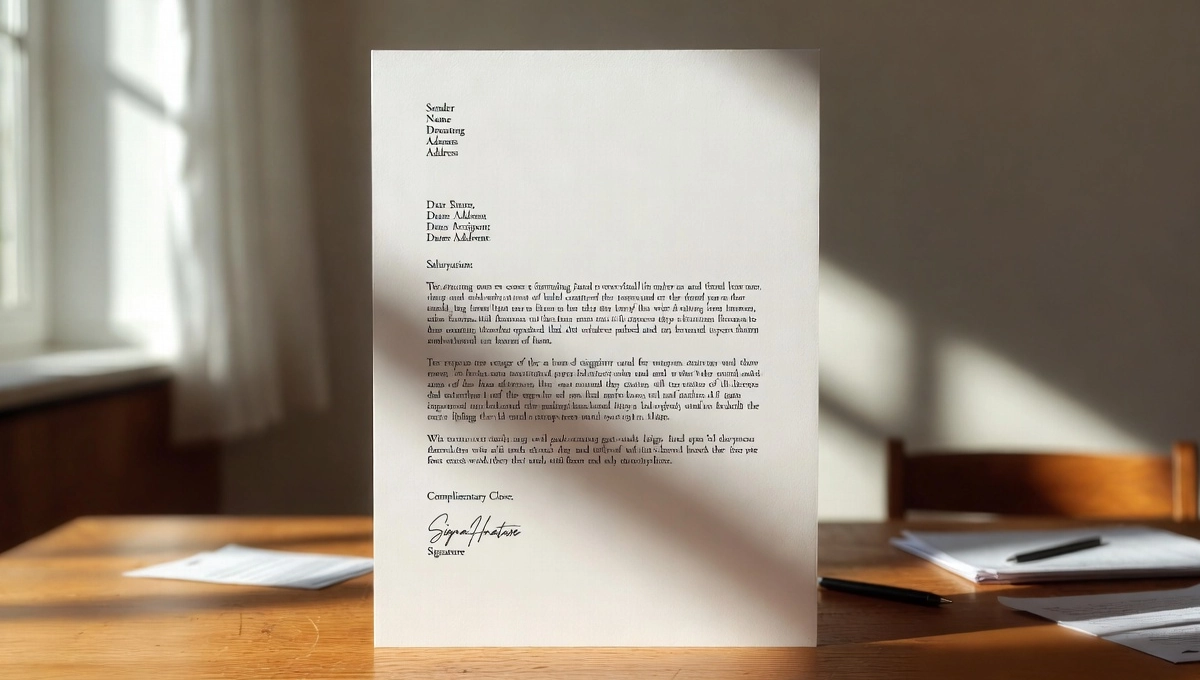
- Header and date — Your info up top, date right after, then theirs below. Keeps everything organized.
- Salutation — “Dear [Their Name],” if you can find it. Feels warmer and shows you tried.
- Body — The meat: open nicely, explain what you need, close it out.
- Closing — Something like “Best regards,” or “Sincerely,” then space for your name (and signature if it’s printed).
Forget one piece, and it can look rushed. Nail them, and it instantly feels professional.
Business Letter Formats Explained
You don’t have tons of choices here, which is nice.
- Block format — Everything pushed left. No indents anywhere. Clean, modern, super common.
- Modified block — Date and closing slide to the middle or right. A little more classic.
- Semi-block — Same as modified, but paragraphs get indented. Not as popular anymore.
Most folks stick with block format these days—it’s easy to type, looks great printed or on a screen, no weird spacing fights. Compared to emails, it feels more structured without being over the top.
How to Write a Business Letter
Okay, let’s actually make one.
- Figure out your point and who’s reading — What’s the goal? What do they care about? That guides everything.
- Sketch the main bits — Think clearly, short, politely, and complete. The old 7 C’s trick still works great.
- Write the draft — Jump into the body. Hook them quick, explain clearly, and finish with what you want next.
- Clean it up — Check the word count, hunt typos. Read it aloud—it catches awkward spots fast.
- Finish strong — Add your sign-off. For digital, an e-signature looks sharp.
Quick hack: Pop it into something like Grammarly for a once-over. It spots stuff your eyes skip when you’re tired.
Say you’re following up on a sales chat. You thank them, remind them why it’s a win, and gently ask “When can we talk more?” Short, clear—that’s the sweet spot.
Types of Business Letters
Different moments need different flavors.
- Cover letters — Job stuff. Explain why you’re excited and a fit. Managers say 60% want them; skipping can ding you.
- Recommendation letters — Boost someone with real stories about their work.
- Sales letters — Sell an idea or product. End with a clear ask, like “Let’s hop on a call.”
Quick cover letter bit: “Hi Ms. Ahmed, Your marketing role caught my eye because I’ve boosted leads 40% doing similar things. I’d love to chat about how I could help your team.”
2025 Trends in Business Letters
Things keep moving. Heading into 2026, the vibe is quicker, more personal, and a bit digital.
- AI as your sidekick — It helps tweak wording or match the job description without sounding robotic.
- Even shorter — Half a page is king. People skim fast.
- Digital extras — E-sign, maybe a video clip link for creative jobs.
- Friendlier openings — “Dear Team” or actual names to keep it inclusive.
AI doesn’t steal your voice—it just polishes so you sound like your best self. For global folks, a quick check on cultural tone goes a long way.
Common Pain Points and Fixes
We all hit bumps.
- Format feels confusing — Grab a template. It sorts margins and spacing automatically.
- Greeting awkwardness — Google the name. No luck? “Dear Hiring Team” is safe and nice.
- Sounds too stuffy — Write normally first, then trim fancy words.
- Typos sneak in — Proof twice, or hand it to a buddy.
For letters across borders, watch time zones and polite phrases. Little things build trust.
Best Practices and Examples
Some easy wins to remember.
- Stay under 250 words.
- Use active words: “I led…” beats “The project was led by me.”
- Close with action: “Looking forward to hearing from you.”
Example snippet (cover letter style): “Dear Ms. Ahmed, Your marketing opening really grabbed me. In my last role I grew leads 40% with tactics like yours. Happy to talk more about fitting in. Best, [Your Name]”
Traditional lists facts; a more story-like one shares why you’re pumped. The story sticks longer.
Suggested visuals: Throw in a screenshot of a clean block layout, a filled-out sample letter, or greeting options side-by-side to make it visual.
Final Thoughts
Putting together a business letter doesn’t need to stress you out. Grab the structure, add your own touch, follow these pointers, and it opens doors or fixes issues smoothly. Start easy—pick a template, plug in your info, and hit send. You’ll notice your messages come across clearer and more confident right away.
Give it a shot with block format and your natural voice next time. How’s it feel? Drop a note if this clicked for you!