What Size Generator Do I Need? An Australian Sizing Guide
If you are asking what size generator Australia homes, tradies and campers should buy, you are asking the right question before spending money. Generators are one of those purchases where both mistakes hurt. Buy too small and the unit trips the moment a fridge compressor or an air compressor kicks in. Buy too big and you have paid for capacity you never use, plus a heavier machine that drinks more fuel every hour it runs.
The good news is that sizing is not guesswork. Every load in your house or workshop has a running wattage and, for anything with a motor, a higher starting wattage. Add those numbers up honestly and the right generator size falls out of the maths. This guide walks through the method, works two real examples end to end, and finishes with the mistakes that catch people out. When you want your own numbers instead of our examples, our free generator and power station sizing calculator does the adding for you.
What size generator Australia buyers actually need: the short answer
Most Australian households fall into one of three bands. If you only need to keep a fridge cold, lights on, phones charged and a modem running during a blackout, a quiet inverter generator in the 1,000 to 2,200 W class is usually enough. If you want those essentials plus a microwave, a water pump or one power tool at a time, you are looking at the 3,500 W mid-size class. Running most of a house, a workshop with a compressor, or several motor loads at once pushes you to 5,000 W and above.
| Typical job | Generator class | What it covers |
|---|---|---|
| Camping and caravanning | 1,000–2,200 W inverter | Fridge, lights, chargers, CPAP, a fan |
| Blackout essentials at home | 2,200 W inverter | Fridge, lights, TV, laptop, router, phone charging |
| Home backup plus comforts | About 3,500 W | Essentials plus microwave or a small pump, one at a time |
| Tradie site and workshop work | 5,000–5,500 W | Saws and a small compressor, not all at once |
| Whole-home essentials | 7,000 W and up | Most circuits except big ducted systems and ovens together |
Those bands are a starting point, not a substitute for your own load list. Two homes with the same fridge can land a full class apart once a bore pump or a second fridge enters the picture. That is why the worked examples below matter more than the table.
Running watts vs starting watts: the one idea that decides everything
Ask ten people what size generator Australia retailers sold them and half will quote a single number off the box. The problem is that a generator has to survive two different moments. The first is steady running: the watts your loads draw once they are going. A household fridge sips roughly 150 W while its compressor runs. LED lights for a room might draw 50 W. A laptop draws about 65 W.
The second moment is start-up. Motors draw a surge when they start — often two to three times their running draw, for a fraction of a second. That same fridge can demand around 1,200 W to kick its compressor over. A small air compressor that runs at 1,100 W can surge to about 2,200 W. A water pump running at 750 W can surge near 2,250 W.
So the sizing rule is simple. Your generator’s continuous rating must beat your total running watts, and it must also absorb your running total plus the single biggest surge among your loads, because motors rarely all start in the same instant. Size for the running total alone and the first fridge start trips the breaker. Size for every surge added together and you will buy a machine two classes too big.
Worked example 1: blackout essentials for a house
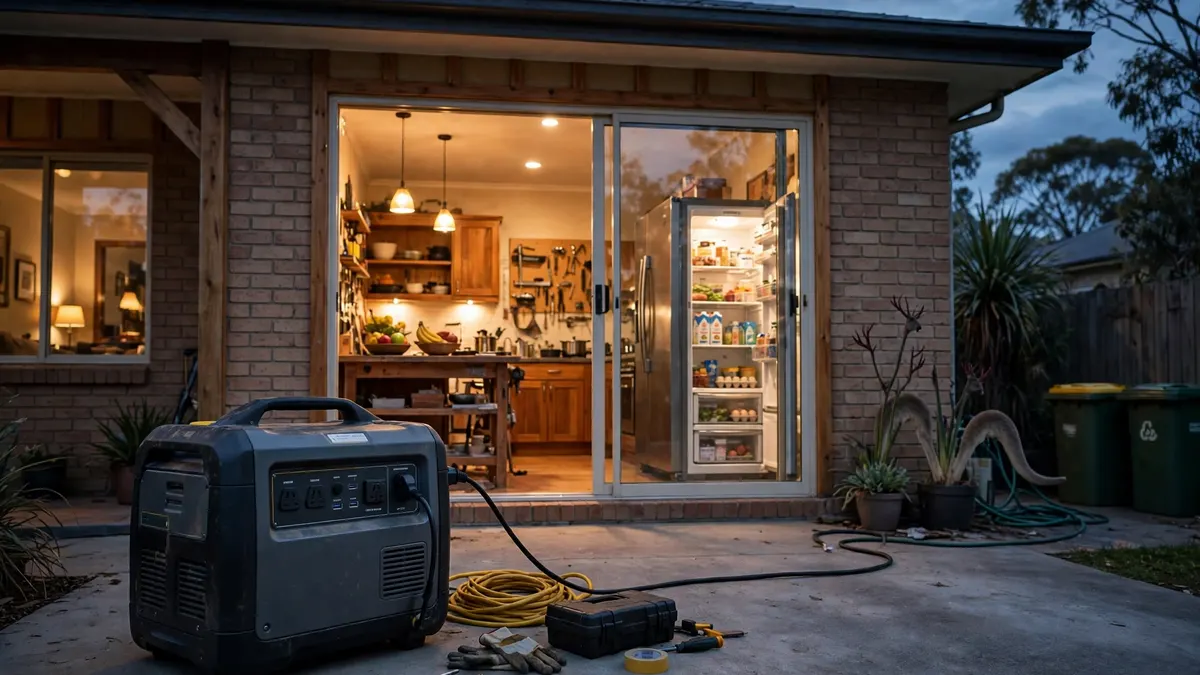
Take a typical blackout kit: a household fridge (150 W running, 1,200 W surge, running 8 hours across the day), LED lights (50 W, 6 hours), a TV (120 W, 4 hours), a laptop (65 W, 5 hours), phone charging (15 W, 3 hours) and a Wi-Fi router (10 W, 24 hours).
Running watts: 150 + 50 + 120 + 65 + 15 + 10 = 410 W. Surge peak: the biggest surge extra is the fridge at 1,200 − 150 = 1,050 W, so the worst moment is 410 + 1,050 = 1,460 W. Daily energy: (150 × 8) + (50 × 6) + (120 × 4) + (65 × 5) + (15 × 3) + (10 × 24) = 1,200 + 300 + 480 + 325 + 45 + 240 = 2,590 Wh.
Read those three numbers and the answer is clear. A 2,200 W inverter generator covers the 1,460 W peak with headroom and sips fuel at a 410 W cruise. If you prefer silent battery power, that 2,590 Wh day means a power station with roughly 3,885 Wh of usable capacity once you allow for not draining the battery flat and for inverter losses — which is why blackout kits often pair a mid-size power station with a small generator as backup. We compare the two battery brands most Australians shortlist in our EcoFlow vs Bluetti comparison.
Worked example 2: a tradie running tools on site
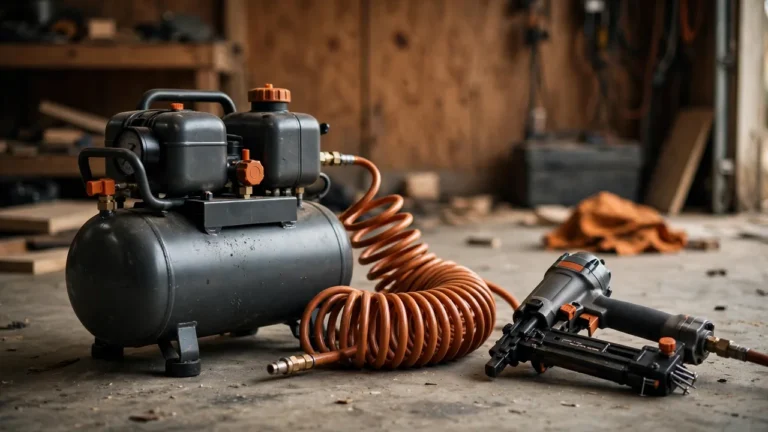
Now a work site: a power drill or driver (600 W running, 900 W surge), a circular saw (1,200 W running, 1,800 W surge) and a small air compressor (1,100 W running, 2,200 W surge) — the compressor being the load we size carefully in our air compressor buying guide as well.
Running watts if all three were somehow going at once: 600 + 1,200 + 1,100 = 2,900 W. In practice one person runs one tool at a time, but the generator still has to start the compressor while the saw is spinning down, so plan on the running total of the tools in use plus the biggest surge extra: 1,100 W for the compressor. A realistic worst moment sits near 4,000 W. That lands you in the 5,000 to 5,500 W class — the tradie frame or large inverter range — with enough headroom that the compressor starts cleanly instead of groaning.
Notice what changed between the two examples. It was not the number of items. It was motor surges. One small compressor moved the answer up two classes.
What size generator for camping and caravanning?
Camping loads are kind: a 12 V fridge run through the van system, LED lighting, device charging, maybe a CPAP machine at 40 to 60 W overnight. Most campers are honestly served by the 1,000 to 2,200 W inverter class, and the deciding factors become noise and weight rather than watts. Inverter generators throttle down under light load, which is why they are the default recommendation for caravan parks where your neighbours are three metres away.
The exceptions are air conditioning and big microwave use in the van. A caravan air conditioner is a motor load with a real start-up surge, and it can push an otherwise happy 2,200 W setup over the edge. If air con is non-negotiable, size for its surge specifically, or look at a power station and solar pairing for the quiet hours and keep the generator for the heavy lift.
One more camping note: altitude and heat both trim a generator’s real output, and Australian summer touring combines the two. A unit that starts your loads happily at home in spring may labour at a high-country camp in January. The headroom built into the class recommendations above is partly there for exactly this reason — another argument for sizing from your real load list instead of the smallest machine that survives a mild day.
Inverter or conventional, petrol or diesel?
For most readers of this guide, an inverter generator is the right default. The power is cleaner, which matters for laptops, TVs and modern fridge electronics. The engine slows down when the load drops, so fuel use and noise both fall. Conventional open-frame generators cost less per watt and suit building sites where the load is tools, the hours are long and nobody is trying to sleep nearby. Diesel makes sense mainly for very long runtimes and existing diesel storage on farms; for suburban backup it is heavier and dearer than most people need.
Whatever you buy, check the continuous rating rather than the headline peak number, and confirm the rated output at Australian voltage from the manufacturer’s local specifications before you pay. The Australian Government energy site is a sensible starting point for broader home energy planning alongside your generator decision.
Sizing a power station instead of a generator
Everything above applies twice over if you are weighing a battery power station, because the same loads produce two separate tests. The station’s AC output in watts must beat your surge peak, exactly like a generator. But its capacity in watt-hours must also cover your daily energy after losses — our worked blackout example needed 2,590 Wh of actual consumption, which becomes roughly 3,885 Wh of nameplate capacity once you keep a reserve in the battery and allow for inverter losses. Buyers who ask what size generator Australia shops would sell them often discover the honest answer is a power station for the quiet loads and no generator at all. Run both sets of numbers before deciding, because a station that can start your fridge but empties by midnight has only solved half the problem.
Five sizing mistakes that catch Australians out
Trusting the box number. The big number on the carton is often the peak. Your loads care about the continuous rating underneath it.
Forgetting the pump. Bore pumps, pressure pumps and pool pumps carry some of the largest surges in a home. Leave the pump off your list and your neat calculation falls over at the first start.
Adding every surge together. Motors do not all start in the same second. Adding all surges oversizes the machine, the fuel bill and the price.
Ignoring daily energy. Watts tell you whether the generator can start your loads. Watt-hours tell you how much fuel you will burn, or how big a battery you need. Both numbers matter, and they answer different questions.
Buying for the oven and the ducted air con. Resistive heating loads are enormous and usually poor value to back up. Heat with gas or wood during an outage if you can, and let the generator do the jobs it is good at.
Run your own numbers before you buy
You now know what size generator Australia conditions demand for the two most common jobs, and why the answer swings so much between a quiet blackout kit and a working site. Before you spend anything, list your own loads the same way: running watts, surge watts, hours per day. Then put them into our Generator and Power Station Sizing Calculator — tick the appliances you own, edit any wattage to match the compliance plate on your gear, and it will total your running load, your worst-case surge peak and your daily energy, then name the generator class and power station class to look for. Two minutes with your real numbers beats a guess at the shop counter every time.
Frequently Asked Questions
What size generator do I need to run a house in Australia?
For blackout essentials — fridge, lights, TV, devices and a router — a 2,200 W inverter generator usually covers the running load and the fridge’s start-up surge. Add a water pump, regular microwave use or power tools and step up to around 3,500 W. Running most of a home at once takes 5,000 W or more, and whole-home comfort including ducted air conditioning is standby-generator territory.
What size generator will run a fridge and a freezer?
Each unit runs at roughly 100 to 200 W but can surge to 800–1,200 W on compressor start. A 1,000 W inverter generator can start one fridge; a 2,200 W class unit comfortably handles a fridge and freezer together plus lights and chargers, because the two compressors rarely start in the same second.
Is a 2,200 W generator enough for camping?
For most campers, yes. Fridge, lights, charging and a CPAP machine sit well inside a 2,200 W inverter’s capacity, and its quiet low-load running suits caravan parks. Caravan air conditioning is the exception — check its start-up surge before relying on the smaller class.
How do I work out my surge watts?
Check the appliance’s compliance plate or manual for a starting or peak figure. As a rule of thumb, motor loads surge at two to three times their running watts: fridges around 1,200 W, small air compressors around 2,200 W and water pumps up to three times running. Add only the single biggest surge to your running total.
Generator or portable power station — which should I buy?
Power stations win on silence, indoor-safe use and zero fuel, and suit daily energy needs up to a few kilowatt-hours. Generators win on long runtimes, heavy motor loads and cost per watt. Many households end up with both: the power station for quiet essentials and the generator for pumps, tools and long outages.