What Is NYSE American: FLYY? Spirit Airlines Ticker Explained
Ever wondered what “nyseamerican: flyy” actually means? It was the ticker for Spirit Airlines’ parent company during a brief 2025 relisting. Here’s the full story on the quick rise, the bankruptcy crash, and where things sit now in early 2026.
Let me lay it out for you straight away so you know what you’re getting into:
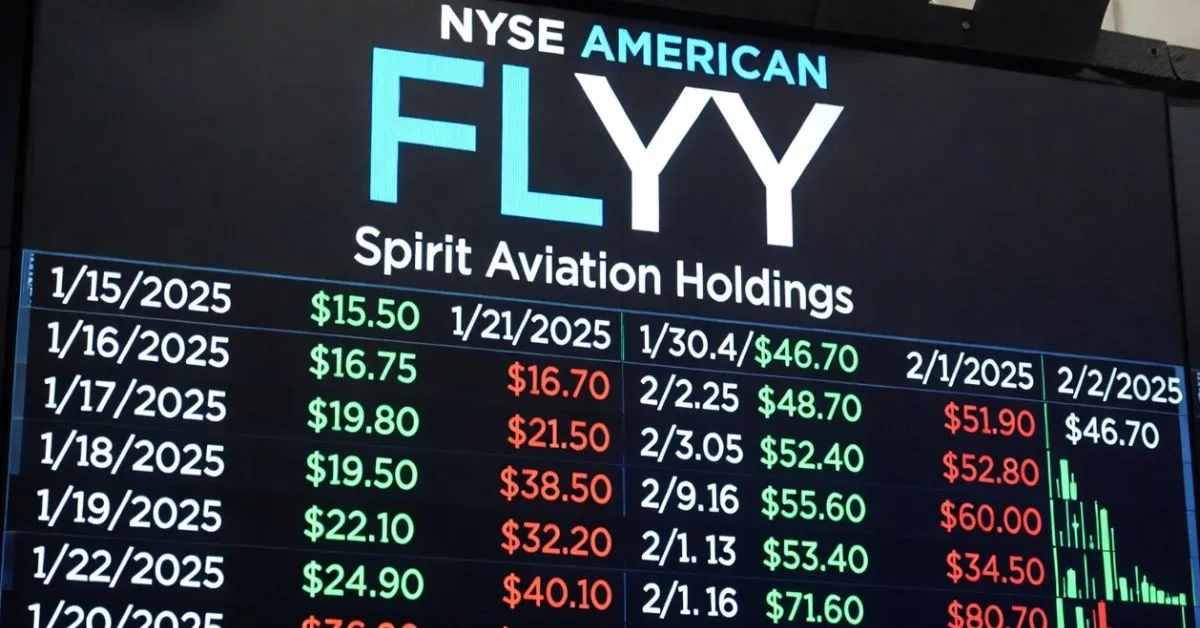
“NYSE American: FLYY” was basically the stock symbol for Spirit Aviation Holdings, which owns Spirit Airlines, back when they got listed on that exchange in spring 2025. The whole thing lasted only a few months before everything went sideways with another bankruptcy filing in late August 2025.
That led straight to delisting, and now the shares limp along on the OTC market as FLYYQ at rock-bottom prices. Anyone who held onto shares is staring at a likely total wipeout because the plan calls for cancelling common stock without paying shareholders anything. The planes are still flying, though the airline is slashing routes, jobs, and costs left and right to try surviving this mess. And yeah, this counts as a rare “Chapter 22” for a big U.S. airline—meaning they went through bankruptcy twice in quick succession, which tells you just how rough things have been for these ultra-low-cost guys.
If you typed “nyseamerican: flyy” into a search bar recently, chances are you’re trying to figure out what happened to this airline’s stock or whether your upcoming Spirit flight is even safe. Spirit used to be that airline everyone knew for dirt-cheap tickets—if you didn’t mind paying extra for a carry-on or a seat with space for your legs.
It attracted a ton of people who just wanted to get from point A to point B without breaking the bank. But after the pandemic wrecked travel for a while, the bills piled up fast. Debt got out of control, fuel prices spiked, engines on their planes needed pricey fixes, and deals to merge with other airlines fell apart. By the start of 2025, they thought they’d turned a corner. They restructured once, came out cleaner, and got the green light to trade as FLYY on NYSE American starting April 29. It felt like maybe, just maybe, things were looking up.
That optimism didn’t hold.
What Does “NYSE American: FLYY” Mean?
When people talk about “nyseamerican: flyy,” they’re referring to the ticker FLYY that Spirit Aviation Holdings used on the NYSE American exchange. NYSE American isn’t the flashy main board—it’s more for smaller or growing companies that want a public listing without all the huge requirements of the big NYSE. For Spirit, getting that spot was supposed to be a big deal. It gave them more visibility to investors and a chance to raise money or build credibility while they worked on getting profitable again.
They ran an all-Airbus fleet, which is pretty young and burns less fuel than older planes, and they flew to spots all over the U.S., plus Latin America and the Caribbean. The leadership talked a lot about changing things up—flying smarter routes, cutting waste, and giving customers a bit more choice without ditching the low-price promise. It sounded promising on paper.
Spirit Airlines’ Path to NYSE American Listing
Spirit has been around since the 1960s, but it really took off in the 2000s as a true budget carrier. The idea was simple: strip out everything extra so base fares stay super low. Want a soda? Pay for it. Need to check a bag? That’s extra too. It worked for a long time because plenty of folks were happy to save money and handle the add-ons themselves.
Then came the pandemic, and everything changed. Travel stopped, losses snowballed—more than $2.5 billion wiped out since 2020—and recovery was brutal. Fuel costs shot up, competition got fiercer, and attempts to team up with Frontier or JetBlue didn’t pan out. Debt kept growing. Late in 2024, they filed their first Chapter 11 to reorganize and shed some of that weight. They came out the other side in early 2025, set up Spirit Aviation Holdings as the parent, and pushed for that NYSE American listing. Revenue had dipped to about $4.91 billion in 2024 (down roughly 8% from the year before), but the relisting felt like proof they were on the mend.
The August 2025 Chapter 11 Bankruptcy Filing
It didn’t take long for reality to bite. On August 29, 2025, they were back in court filing for Chapter 11 again—this time in New York. Calling it a “Chapter 22” isn’t just a joke; it’s rare and signals the first round didn’t fix the deep problems. Losses kept coming, debt was still crushing, demand wasn’t bouncing back like hoped, and aircraft lessors were getting tough. The filing let them keep the doors open while sorting things out. Flights didn’t stop, people still got paid for work after the filing, and your Free Spirit miles didn’t vanish overnight.
The CEO at the time, Dave Davis, put out messages saying this was about building something that could actually last—trimming the network, renegotiating deals, and adapting to what passengers really want now.
Delisting from NYSE American and Move to OTC
The bankruptcy news hit the exchange rules hard. NYSE American has guidelines that say a company in Chapter 11 often isn’t suitable to stay listed, so they started delisting right away. Trading stopped in early September 2025, and the symbol switched to FLYYQ on the over-the-counter Pink sheets. OTC isn’t like a regular exchange—it’s looser, less watched, and usually means lower trading volume and bigger price swings.
Fast-forward to right now in January 2026: FLYYQ is hanging around $0.20 to $0.23 most days. The market cap is microscopic, maybe $6 million or so on a good day. It spiked briefly to around $13 when the original listing happened, but it’s been downhill ever since the troubles mounted.
What Happens to FLYY/FLYYQ Shareholders?
This is the tough part for anyone who bought in hoping for a rebound. In bankruptcies with this much debt, regular shareholders almost always come last—or get nothing. Spirit’s restructuring plan points to cancelling the common stock entirely when they emerge, meaning no payout, no shares left. If you were holding FLYY or jumped into FLYYQ thinking it was cheap, it’s probably heading to zero.
Some law firms started looking into class actions, checking if there were misleading statements before things fell apart. Selling now means locking in huge losses, and waiting around carries the risk of the whole thing evaporating. It’s a classic distressed stock warning: high risk, and in this case, very little upside left.
Spirit Airlines Today: Operations and Restructuring Progress
The good news? Planes are still in the air. Spirit keeps serving a bunch of cities, leaning hard on the routes that actually make money. They’ve trimmed the fleet by rejecting some leases and parking planes they don’t need right now. The all-Airbus setup helps with efficiency, even if the network is smaller.
On the progress side, they’ve locked in some key wins lately. Pilots and flight attendants voted yes on contract changes starting January 2026—temporary pay and retirement cuts that get restored later, plus pilots got a $278 million claim in the bankruptcy to give them skin in the game. They also pulled in more financing, like an extra $100 million in debtor-in-possession money (with $50 million usable right away) to keep things going. Route adjustments continue—ending service in places like Milwaukee and Phoenix—and they’ve added some premium options to bring in different kinds of customers.
But it’s not smooth sailing. Early 2026 saw a bunch of cancellations because of staffing shortages, illness spikes, and the lean operation leaving no buffer. Bondholders are being urged by unions to keep the cash flowing, or liquidation becomes real. The company itself has talked about “substantial doubt” on surviving without more help, and analysts give mixed odds—maybe 60% chance through the year if a deal happens, but it’s tight.
Comparisons to Other Airline Bankruptcies
Airlines have been through this before. American Airlines came out of Chapter 11 in 2011 stronger, eventually merging and rebuilding. Delta and United did similar turnarounds after the 2000s messes. Those cases often ended with fresh starts because the industry recovered and mergers helped.
Spirit’s situation feels different. Going bankrupt twice so close together shows the first fix wasn’t deep enough. The ultra-low-cost world is cutthroat—big carriers offer low fares with nicer perks, and Spirit’s model depends on volume that just isn’t there consistently. Outcomes could range from slimmed-down independence (hard), to a merger (Frontier rumors keep floating), to liquidation (which would hurt jobs and raise fares elsewhere).
Practical Tips for Affected Travelers and Investors
If you’re booked on Spirit or thinking about it: Keep checking your flight status often because changes happen fast. If a route gets cut, they usually reach out with refund or rebooking options. For peace of mind, maybe lean toward carriers like Southwest or Frontier that have similar prices but more stability. Your Free Spirit points are still good for now, so don’t panic-spend them yet—just watch the updates.
For anyone with shares or considering them: Steer clear of OTC plays like this unless you really know distressed investing inside out. If you’re stuck holding, look into writing it off on taxes as worthless (get advice from someone who knows your situation). Follow the official restructuring site or court updates for real news—don’t chase rumors. And honestly, spread your bets elsewhere; airlines like this are exciting until they’re not.
FAQs
What is nyseamerican: flyy?
“nyseamerican: flyy” was the ticker symbol FLYY on NYSE American for Spirit Aviation Holdings, Spirit Airlines’ parent company. It started trading on April 29, 2025, after they restructured, but bankruptcy in August 2025 led to delisting. Now the stock trades OTC as FLYYQ at very low prices with big risks ahead.
Why was FLYY delisted from NYSE American?
The August 2025 Chapter 11 bankruptcy filing triggered delisting under exchange rules that consider bankrupt companies unsuitable for continued listing. Trading halted, and it moved to OTC markets as FLYYQ where it’s much harder to buy or sell in volume.
What is the current status of FLYYQ stock in 2026?
Right now in January 2026, FLYYQ trades on OTC Pink for about $0.20 to $0.23 with super low volume and wild swings. The market value is tiny, and the restructuring plan expects to cancel common stock, so shareholders are likely looking at nothing left.
Is Spirit Airlines still flying during bankruptcy?
Absolutely—flights keep going, you can still book tickets, and the loyalty program works as usual. They’ve cut some routes and staff to save money, but core service continues while they reorganize under court protection
Will Spirit Airlines shareholders get anything from bankruptcy?
It’s looking unlikely. With so much debt, plans like this usually wipe out common shareholders completely—no recovery or new shares. Creditors with secured claims come first, leaving equity holders with zero in most cases.
What caused Spirit Airlines’ second bankruptcy in 2025?
Years of heavy losses piled up—over $2.5 billion since 2020—plus crushing debt, failed merger tries, rising costs everywhere, and demand that never fully recovered. The first restructuring helped some but didn’t solve the core issues, so they had to go back in.
Stories like Spirit’s show how unpredictable the airline world can get, especially when you’re trying to keep fares the lowest around. If you’re flying soon, pick what feels reliable for your trip. If investing’s your thing, do your homework and maybe talk to someone who gets the risks. Keep an eye on their official updates for the latest—things change quick. Fly safe out there!