Top Gas Chainsaws in 2026: Reliable Picks for Real Work
Searching for the top gas chainsaws in 2026? Here’s a close look at standouts like Echo CS-590, Husqvarna options, and Stihl models. Find out why Top Gas Chainsaws still shine for heavy jobs, plus battery face-offs and simple fixes for common hassles.
Hey, think about those chilly February mornings in Abbottabad when the wind has knocked down a few branches overnight, or you’re stacking wood for the wood stove to keep the house cozy. You need something that starts quick and keeps cutting—no fading out halfway through. That’s exactly why a decent gas chainsaw feels like such a trusty companion.
Batteries have gotten impressive lately, no doubt. But for longer hauls or thicker stuff, top gas chainsaws just don’t quit. Pour in fresh mix, and you’re set again. In early 2026, with all the updates, gas still holds strong for the tougher side of things—especially when cold snaps hit and batteries lose their edge fast.
Key Takeaways
- Top gas chainsaws give you endless runtime and solid torque for big, drawn-out jobs where batteries tap out.
- Echo’s CS-590 Timber Wolf shows up everywhere as a go-to because it nails power, handling, and price.
- Husqvarna and Stihl keep proving reliable, from light home use to serious clearing.
- A handful of easy habits wipe away annoyances like tough pulls or extra shake, so these saws run strong for years.
- Grab a gas chainsaw when you want that raw cutting force over super-silent convenience.
Why Top Gas Chainsaws Hold Their Own in 2026
Let’s face it, battery chainsaws have made huge leaps. Many now cut almost as quick as lighter gas ones, and you avoid the whole fuel hassle plus the fumes. Still, places like Consumer Reports highlight how gas dominates heavy-duty work.
Bigger engines slice thick limbs clean in one pass. Picture loading up firewood for the whole winter or clearing storm debris across a good chunk of land. With gas, you just refill the tank—no hunting for chargers or dealing with power drop in the cold. People in more remote or wooded areas often stick with top gas chainsaws for that steady reliability.
One standout from tests: gas models frequently top total cut volume on demanding tasks, even as batteries take points for quick, easy jobs.
How to Pick the Gas Chainsaw That Suits You
Ask yourself first—what’s the main job? Engine size (cc) points the way. 35-50cc covers trimming, small branches, occasional firewood without feeling overkill. For dropping decent trees or heavy stacks, 50-60cc+ delivers the needed punch.
Bar length ties in—16-18 inches works great for home tasks; 20 inches or longer manages bigger pieces smoothly. Weight plays in too—10-13 pounds avoids arm burnout on longer sessions.
Features that make a real difference:
- Decompression valves or simple choke systems mean less effort to start.
- Anti-vibe handles keep hands from going numb.
- Cleaner-running engines cut smoke while keeping power up.
Budget breakdown: basic gas chainsaws start $200-300 for light use. Mid-level $400-600 brings smoother feel and better build. Pro-grade costs more but lasts through hard seasons.
Standout Gas Chainsaw Choices for 2026
These keep rising in fresh reviews and tester hands-on work.
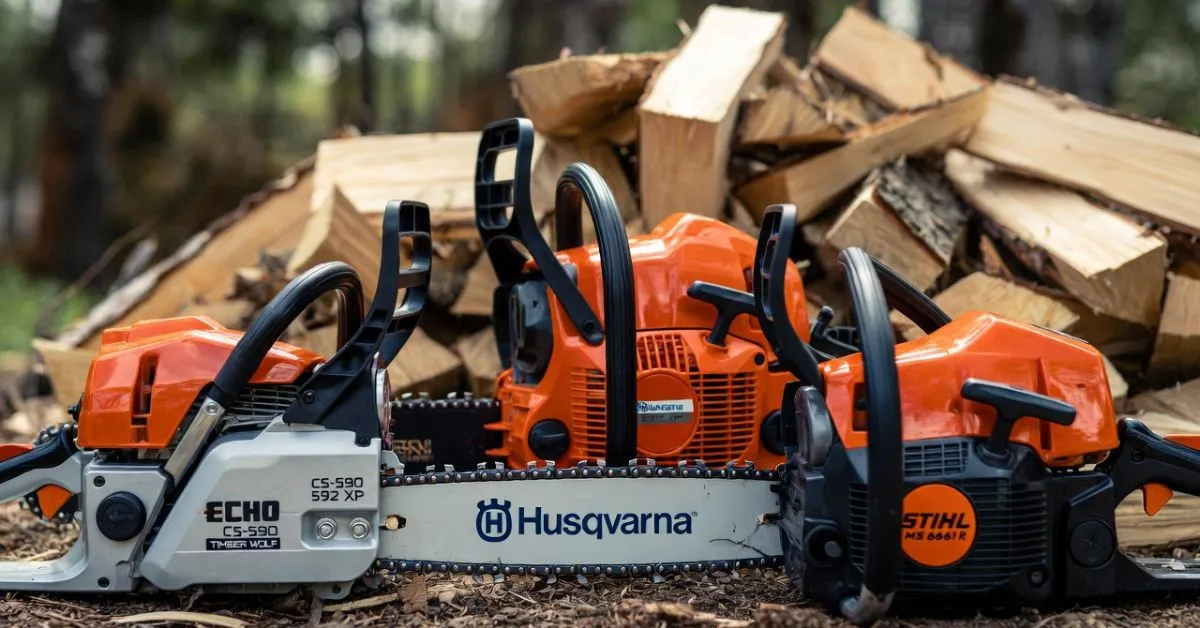
Top All-Around: Echo CS-590 Timber Wolf
59.8cc engine, 20-inch bar, roughly 13 pounds. It chews through big logs steadily, starts reasonably easy, and feels well-balanced. Suits regular firewood prep or cleanup after rough weather.
Pros: Plenty of pull, dependable day in day out, good price point. Cons: Louder operation, like most top gas chainsaws.
Best for Home and Firewood: Husqvarna 130 or 440
Husqvarna 130 (around 38cc, 16-inch bar) keeps things light and approachable—ideal if you’re building confidence. The 440 adds extra strength for steady firewood sessions. Both offer fast starts and reduced vibration for comfort.
Pros: Easy handling, comfy design, perfect for around-the-house needs. Cons: Not ideal for massive timber.
Heavy-Duty or Pro Favorite: Husqvarna 460 Rancher or Stihl MS 271 Farm Boss
Husqvarna 460 (near 60cc, 20-24 inch bar options) runs efficient with features like X-Torq. Stihl MS 271 (50cc range) stays balanced for farm work or tough clearing. Vibration dampening makes extended use bearable.
Pros: Built tough, strong performance, holds up to heavy loads. Cons: More weight and higher upfront cost.
Budget Pick: Echo CS-3410 For lighter duties without spending big, this compact Echo handles reliably with fewer bells and whistles.
Drawn from real-user and expert feedback on cutting speed, startup, and long-term toughness.
Gas Chainsaw vs Battery: What Makes Sense for You
No one-size-fits-all answer. top gas chainsaws deliver instant, constant power—just keep extra mix handy. They tackle dense wood better on large-diameter cuts. Battery models start with a push, stay quiet, and skip mixing or exhaust.
By 2026, high-end batteries nearly match mid-tier gas for short bursts. Stretch to full-day work or cold mornings, though, and gas pulls ahead—batteries drain quicker in low temps. Gas means more noise and smell; battery means simpler, cleaner sessions.
Opt for top gas chainsaws on big clearing or winter prep projects. Battery fits quick yard chores or days you want minimal fuss.
Straightforward Care Tips to Make It Last
Most headaches—hard starting, power loss—come from skipped basics. Mix fuel fresh (50:1 ratio usual) and toss old stuff. Old mix gums up the carburetor fast.
Clean the air filter often—dust builds quick. Sharpen the chain regularly so it glides instead of dragging. Adjust tension snug but not too tight to prevent extra wear.
Cold-start shortcut: pump the primer bulb a few times, set choke, brace the saw, pull steady (not wild). Store dry and covered. Follow these, and 10+ years becomes normal.
Must-Know Safety Steps
Always suit up—gloves, eye protection, chaps, sturdy boots. Grip with both hands, stand balanced.
Activate chain brake before every start or move. Avoid overhead cuts—grab a pole saw or ladder instead. Let the chain pull; forcing risks kickback.
Just starting? Practice on thin branches first. Proper gear and smart moves turn the work from risky to straightforward.
FAQs On Top Gas Chainsaws
Good gas chainsaw for beginners?
Husqvarna 130 feels approachable—light, easy-start design, enough power for trimming or light firewood without overwhelming. Great stepping stone as you get comfortable.
Top gas chainsaws better than battery in 2026?
For long, heavy cutting or thick wood, yes—gas offers unlimited runtime and torque that batteries lose in extended or cold use. Batteries win for quick, quiet, low-effort jobs; top ones rival lighter gas now.
Easier way to start a gas chainsaw?
Prime bulb a few pumps, choke on, hold steady on ground, pull firm and even. Better models with valves lighten the pull. Fresh fuel and clean spark plug solve most struggles, especially in cooler Abbottabad mornings.
Right bar length for firewood?
16-20 inches fits most logs nicely. Shorter bars on smaller saws stay nimble; longer ones need matching engine size to cut without slowing. Proper match gives smooth, efficient results.
Typical lifespan of a gas chainsaw?
10+ years common with fresh mix, regular sharpening, and filter care. Pro versions endure rough use longer than basic ones. Steady attention stops small problems from growing.
Top gas chainsaws disappearing because of batteries or rules?
Not likely soon. Some spots restrict new sales over emissions, and batteries rise for easy use. But top gas chainsaws stay vital for pro-level power and endless runtime—heavy jobs still need them.
So there it is—pick a gas chainsaw that matches your typical tasks, give it basic attention, and always stay safe. You’ll power through wood stacks or yard clear-ups feeling ready and capable. Time to get that firewood sorted or branches cleared? Grab one and make it happen!