Best Robotics Kits for Kids in 2026
Searching for the best robotics kits for kids in 2026? I’ve rounded up real favorites—from super simple screen-free starters to clever AI ones. Honest thoughts on what works, age matches, prices, and tricks to skip the dust-collector phase.
You know that feeling when your kid finally gets something to work after fiddling for a while? Pure magic. I saw it happen with a friend’s daughter last year—she was nine, usually bouncing off the walls, but she spent an entire afternoon getting her little bot to zigzag around cushions. No yelling at a game screen, just quiet focus and big grins when it obeyed her commands. That’s why parents keep coming back to these best robotics kits for kids. They turn “tech time” into something that actually builds brain power while feeling like pure play.
Key Takeaways
- Match it to your child’s current vibe—push too far ahead and it’s frustration city; keep it too basic and boredom hits quick.
- The stronger picks in 2026 let kids win early but keep adding layers, like smarter AI or snap-on extras.
- You can grab solid ones from about $70 up to $400, though $100–$250 often hits the sweet spot for real staying power.
- Kids come away sharper at figuring things out and seeing how pieces fit together—skills that sneak into homework and everyday puzzles.
- Most best robotics kits for kids ease you in: play mode first, coding second, so the spark doesn’t fizzle before it starts.
Why Kids Get Hooked on These Kits
Kids learn fastest when they’re the one in charge and things go wrong then right. Hand them a robotics kit for kids and suddenly they’re the boss: “Go forward… no, stop… okay, turn!” The robot bumps the couch, they laugh, tweak it, and next try it glides perfectly. That back-and-forth wires in patience, step-by-step thinking, and “I can fix this” confidence.
Numbers from studies back it up—regular use bumps problem-solving by roughly 27% and spatial awareness by about 42%. You notice the ripple effects: quicker at putting together models, better at directions during family trips, even planning board games with more strategy. Best part? It pulls them away from passive scrolling into something hands-on and noisy in the good way.
I’ve heard from so many parents how it changes the dynamic. The kid who clams up starts explaining sensors to anyone who’ll listen. The one who can’t sit still finds a reason to focus because the robot won’t wait.
How to Pick One You’ll Both Love (No Buyer’s Remorse)
Ask yourself first: How old is my child, and what already grabs them? Preschoolers thrive on zero screens and chunky controls. School-age kids love seeing their ideas come alive on an app. Teens want real challenges that feel grown-up.
Run through these when comparing robotics kits for kids:
- Age and coding vibe — Screen-free basics for 5–7, colorful block coding for 8–10, text or AI for 11+.
- Wallet vs. long haul — $70–$150 covers great entry points; $250+ unlocks way more replay.
- Must-have bits — Wheels or legs, sensors that spot walls or lines, ways to add pieces later, batteries that recharge.
- Built to last — Solid construction, nothing tiny and swallowable for small hands, easy-to-swap parts.
- First-play speed — Instructions that make sense and a quick “it moved!” moment to hook them.
If attention spans are short, hunt for ones packed with different builds or community project ideas. Teaching at home? Some tie neatly into science experiments. Budget squeezed? Don’t skip quality—many lower-price best robotics kits for kids nail the essentials without skimping.
Biggest traps: Overshooting with pro-level stuff (cue tears) or undershooting (toy forgotten by weekend). Shoot for that Goldilocks zone with some headroom to grow.
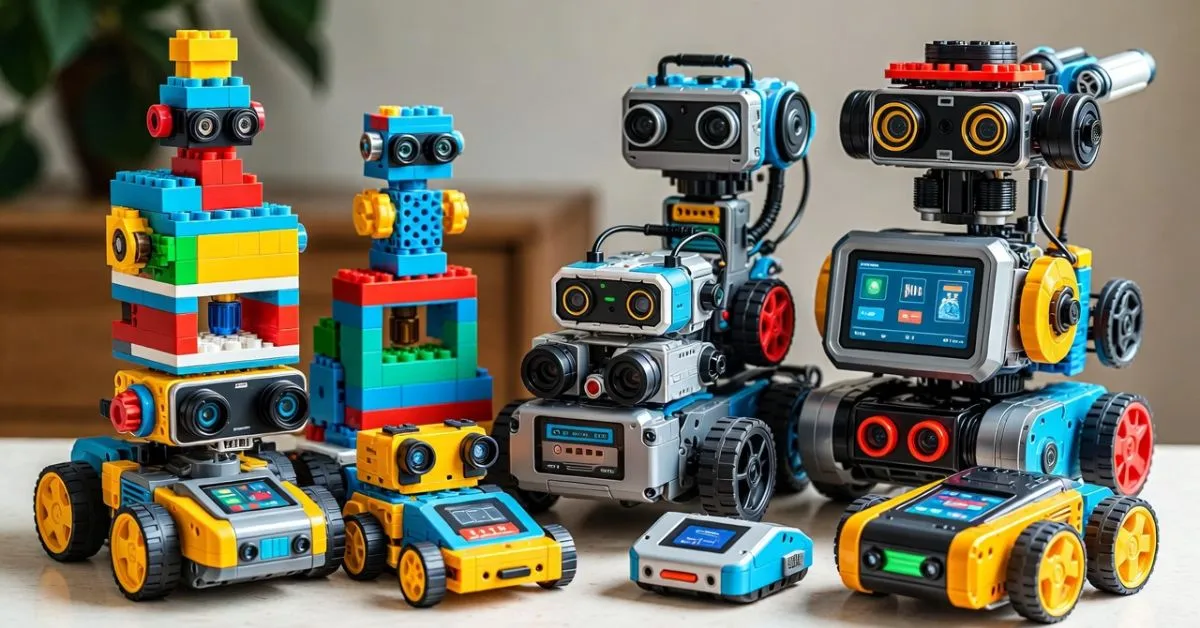
My Favorite Robotics Kits for Kids Right Now (2026 Edition)
These stand out because families keep pulling them out months later—not one-and-done.
- Makeblock mBot or mBot2 — The everyday winner for starters. Ages 8+, usually $70–$150. Click-together parts, Scratch-style coding at first, then Arduino steps and light AI. Pros: Wallet-friendly, endless free ideas online, grows forever. Cons: Might need you to help pair the app once. Kids love the “next level” feeling.
- Wonder Workshop Dash — Instant personality hit. Ages 6+, $150–$180. Voice stuff, blocks, even card play sometimes. Pros: Robot dances, sings, reacts—feels alive. Cons: Less heavy building focus. Spot-on if stories and games are their thing.
- LEGO SPIKE Prime — Builder’s dream. Ages 10+, $250–$400. LEGO bricks plus motors, sensors, Python path. Pros: Blends with existing sets, infinite creations. Cons: Costs more to start. Perfect for LEGO fans ready to level up.
- Sphero BOLT or Mini — Indestructible explorer. Ages 8+, $100–$200. App-driven, rolls anywhere, takes drops. Pros: Waterproof, cool matrix lights. Cons: More rolling than constructing. Great “watch it go” fun without setup headaches.
- WhalesBot E7 Pro — Fresh AI standout. Ages 8+, $150–$250. Sturdy builds, challenges that adapt. Pros: Feels custom as skills grow. Cons: Newer, so fewer ready-made extras yet.
- VEX IQ — Team and contest energy. Ages 10+, $200–$500. Serious engineering pieces. Pros: Builds competition chops. Cons: Steeper start.
- Botley — No-screen champ for tiny hands. Ages 5–7, $50–$80. Remote or cards. Pros: Zero tech stress, fast basics. Cons: Limited growth.
- ELEGOO Smart Robot Car — Cheap electronics gateway. Ages 10+, $70–$100. Line following, sensors. Pros: Low entry to circuits. Cons: Adult nudge helpful early.
Go with whatever matches their spark—racing, inventing, storytelling.
Age Breakdown: What Fits Best When
Ages 5–7 — Screen-free all the way: Botley or Bee-Bot. Arrow presses or cards teach “if this, then that” gently. Zero overwhelm.
Ages 8–10 — Coding starts clicking. Dash, mBot, Sphero deliver block commands and quick wins. Huge pride when the bot follows their plan.
11+ — Time to stretch. LEGO SPIKE, VEX, mBot2 bring Python, AI, bigger goals. They start feeling like mini engineers.
Fresh Twists in 2026 best robotics kits for kids
AI quietly makes things better—some kits notice when your child nails a task and bump the challenge, or ease up if stuck. Snap-together modules mean the same box works for years. Hybrid styles blend no-screen fun with app depth. Rugged outdoor versions pull play outside. More homes and schools lean into these as regular STEM helpers.
Solving the Usual Headaches
Worried about price? Mid-range best robotics kits for kids like mBot deliver years of use without luxury markup.
Build or code too tricky? Kick off in ready-made mode—assemble preset, tweak slowly. Queue up a quick how-to video side-by-side.
Interest drops off? Grab expandable ones and hunt new challenges together.
Dead batteries or snapped bits? Rechargeable and tough models save sanity.
Real Robots vs. App-Only Coding
Apps cost nothing and travel easy. But holding something that actually moves because of your instructions? That extra “whoa” moment cements the lesson way deeper. Physical best robotics kits for kids win for real understanding.
FAQs On Best Robotics Kits for Kids
What’s the best robotics kits for kids beginners?
Hands down, Makeblock mBot or mBot2. Easy snap build, gentle Scratch start, room for Arduino and AI later. Around $100 for ages 8+, and the quick successes keep them hooked without frustration.
Any good screen-free best robotics kits for kids little ones?
Yes—Botley and Bee-Bot shine for 5–7. Remote arrows or cards teach sequences safely, no devices needed. Simple, fun, zero tech battles for young kids.
Best robotics kits for kids 10–12 year olds?
LEGO SPIKE Prime or mBot2 nail it. Solid builds, motors, sensors, plus Python/AI options. Challenging enough for tweens but still playful and expandable.
How much do best robotics kits for kids cost?
Entry ones like mBot hit $70, strong mids (Dash, Sphero) land $150–$250, premium (LEGO, VEX) climb $300+. Extra dollars buy more features and longer fun usually.
Do best robotics kits for kids really help with STEM?
They do—hands-on coding, engineering trials, problem fixes build sharper thinking and creativity. Kids stick with hard stuff longer and carry the skills everywhere.
What’s new in best robotics kits for kids this year?
AI that personalizes difficulty, tougher sensors, screen-free-to-app blends. Kits like mBot2 and WhalesBot feel tailored, keeping engagement high without one-size-fits-all limits.
At the end of the day, the best robotics kits for kids create those “I did it!” sparks that stick. Factor in age, interests, and start modest if you’re unsure. Team up on the first build, cheer the wins, and let them take the wheel. Go find one that clicks—you’re about to watch some serious magic happen. Happy creating!